
How Long Does It Take to Fix a Foundation on a House: Expert Guide
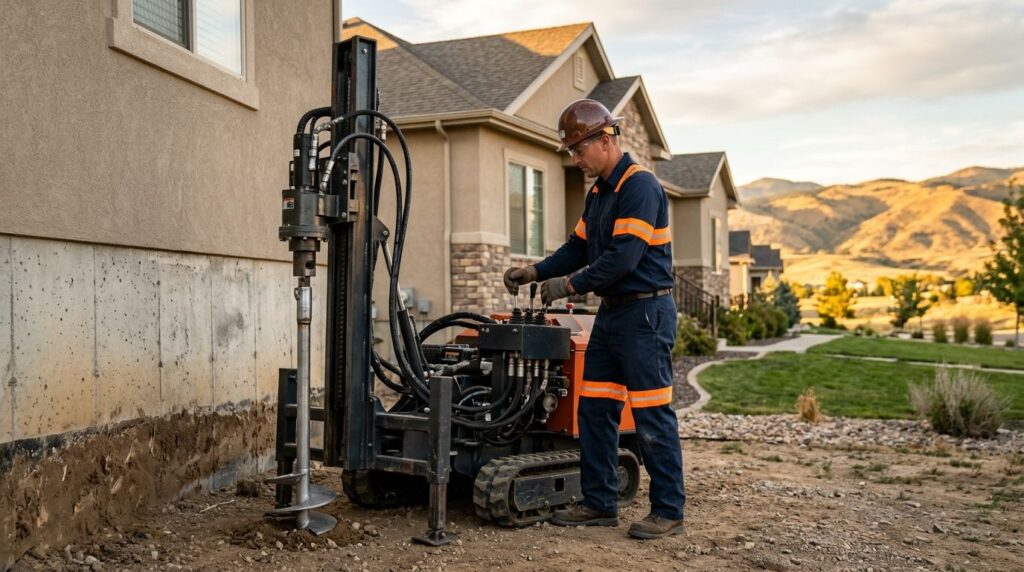
Table of Contents
- Foundation Repair Timelines on Colorado's Front Range
- How Long Does It Take to Fix a Foundation on a House?
- Inspection, Engineering, and Permitting: The Work Before the Work
- Helical Pier Installation: Fast On-Site Work with No Cure Time
- Foundation Crack Repairs and Faster Fixes for Minor Settling
- What Extends Your Timeline and How Houses Settle After Repair
- Plan Your Foundation Repair with Confidence
Foundation Repair Timelines on Colorado’s Front Range
How long does it take to fix a foundation on a house? This largely depends on what type of soil you have, which fix is used and if permits will be needed. Our team begins their process with an on site inspection to determine what needs doing prior to starting work.
The Front Range of Colorado is located on top of vast deposits of bentonite clay from the Cretaceous Pierre Shale formation that swells 4%-8% with moisture changes. As such, foundation repairs in this area have to be done specifically for our local conditions. There are two commonly used methods here, helical steel piers (usually ranging between 17′ and over 50′ deep) and structural epoxy crack injection, but each has a significantly different time frame.
We can only provide realistic expectations after we have had our crews on site, as preliminary estimates will vary depending on what we find once we arrive. We will then go over how the type of soil, the repair method and the permit and installation process all impact the length of the repair.
Key Takeaways
- How long it takes to fix a foundation on a home depends on the type of repair, the soil below your house, and the steps you need to take first.
- The answer to how long it takes to fix a foundation begins before any steel pier touches the ground.
- Once our inspection, engineering report and permits have been completed, installing the on-site helical piers is extremely quick.
- Homeowners living in Denver’s front range may be curious about how long it will take to fix a foundation crack.
- Homeowners frequently ask how long it will take a house to settle after foundation repair.
How Long Does It Take to Fix a Foundation on a House?
How long it takes to fix a foundation on a home depends on the type of repair, the soil below your house, and the steps you need to take first. On the Front Range, expansive bentonite clay soils make things more complicated because these soils can swell up to 4%-8% from dry to saturated, which could extend the timeline for your project if deeper stabilization is required.
Quick fixes versus deeper stabilization
For minor problems such as cracks allowing water to get through, specific fixes like epoxy injection or polyurethane foam can be done in just one trip to repair structural bonds or seal up a leak. They are not used for load transfer, so they require much less time than a total structure stabilization. Helical steel piers involve driving steel shafts down into stable soil layers as deep as about 17 feet, sometimes over 50 feet, to transfer the weight of the home. The depth depends on what local soil conditions permit and it also takes a long time because the installation must prove the torque-to-capacity, and must check for plumb.
Pre-work factors that shape the timeline
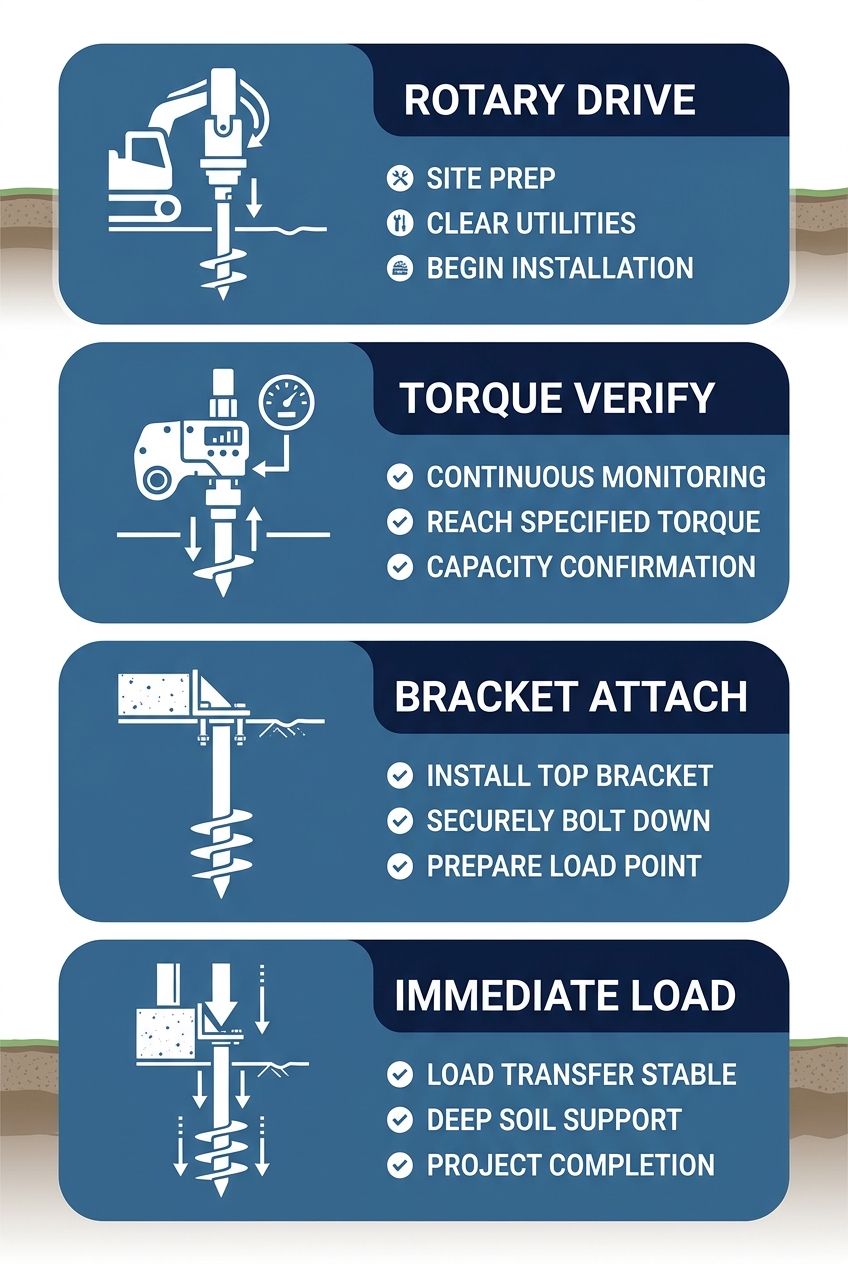
Before any pier installation begins, crews must complete site preparation, utility clearance through 811, and obtain municipal permits. These steps ensure safety and regulatory compliance but can add days or weeks to the schedule depending on local processes. Once installed, helical piers can be loaded immediately because they require no concrete curing time, which helps shorten the overall project compared to methods that depend on cured concrete for stability.
Why an exact timeline isn’t possible upfront
We can’t give you a timeframe without inspecting your home. Soil conditions, degree of cracking, and the needs of your structure are all different for each home, so any numbers we throw out are just ballpark ideas, subject to change when we come in for the evaluation. Homeowners should think of these timeframes as a range rather than an absolute schedule. This will help prevent false hopes and avoid the risks associated with unpermitted or DIY repairs, which can compromise both safety and property value.
Inspection, Engineering, and Permitting: The Work Before the Work
The answer to how long it takes to fix a foundation begins before any steel pier touches the ground. In the Denver Front Range, where expansive bentonite clay soils derived from Cretaceous Pierre Shale can swell between 4% and 8% between dry and saturated states, the preparatory phase is critical to a safe, lasting repair. Our team starts every project with a thorough site evaluation to confirm soil conditions and design depth, ensuring the helical piers will transfer structural loads to deeper, stable strata.
Prior to the installation, we schedule the 811 service to help locate underground lines and get our required permits from the municipality. The permits don’t just cover legalities, they show that the engineered design is in compliance with local building codes, protecting you from losing the resale value on your home, or the ability to qualify for a mortgage. In Colorado, an undocumented or unpermitted foundation repair may cause trouble for sellers and this makes obtaining permits necessary if you plan on selling.
Success on install day hinges on the engineering specifications we establish during this phase. We don’t just reach a target depth; we achieve the specified torque value, which correlates directly to the pier’s bearing capacity through the torque-to-capacity relationship. This ensures the repair meets the structural demands of your home without relying on guesswork. Requirements also vary by municipality in the Denver metro area, so we advise homeowners to verify current local permit rules with their jurisdiction.
Once the engineering and permits are completed, then the actual installation moves quickly, with no concrete cure time needed. This is when the true timeline begins, with the unseen work that makes every foundation repair safe, compliant, and built to last.
Helical Pier Installation: Fast On-Site Work with No Cure Time
Once our inspection, engineering report and permits have been completed, installing the on-site helical piers is extremely quick. Our homeowners in Littleton and around Denver can typically have their foundation stabilized and immediately usable on the same day we begin work.
This process begins with our certified installers driving hollow steel shafts, fitted with helical plates at the top, deep into the ground with special rotary equipment. The helical plates function similar to large screws, distributing the load of the structure onto lower, more stable soil layers instead of the less stable surface soils. As the piers are inserted into the ground, we monitor torque, the rotational force needed to drive the piers, in real time, which is then correlated to the final bearing capacity of the pier using the formula Pu = Kt × T. Once the designated target torque is reached, we know that the pier has been driven to the required capacity to support the load.
The installation process includes certain steps: first we clear out the area so as not to interfere with any surrounding structures. We then install piers to their correct torque level and make sure they remain straight up and down. We put on a strong bracket – either an underpinning bracket for foundation repairs or a flat plate bracket for slab stabilization – which fastens the building onto its new pier. We then put immediate load test and hydraulically stabilize the structure, and your homeowner will be able to immediately load the space without waiting for any concrete to cure.
We test our torque to make sure we know how much force we’re getting when we install it, and there’s no cure time, so you won’t have to wait seven days like you would if you were repairing concrete. In poor soil conditions, helical pier installation can be as much as 66% faster than digging or waiting for curing if you needed to excavate, which makes it a great choice for Denver-area homeowners looking for a fast and durable way to stabilize their foundation.
Foundation Crack Repairs and Faster Fixes for Minor Settling
Homeowners living in Denver’s front range may be curious about how long it will take to fix a foundation crack. It all depends on the type of crack and what kind of repair is chosen. For minor settling, polyurethane foam lifting offers a fast, minimally disruptive solution that can restore a slab in hours rather than days.
Crews will start with a foundation crack inspection to determine its cause. Bentonite clay soils in the Denver area swell 4-8% between dry and wet states, creating pressure that can crack concrete and move walls. Lack of drainage and poor downward slope from the structure exacerbate crack formation. When water flows through cracks but does not jeopardize structural integrity, we use epoxy injection to return the concrete to its original strength and seal the moisture pathway. This method is used on non-structural cracks by bonding the existing materials back together to restore the walls’ ability to bear loads without having to dig up the concrete.
For a minor slab settling issue, foam lifting is a faster option than replacing the concrete. Our team will inject a closed-cell and water-resistant polyurethane foam into a small hole or holes between 1-2 inches in size and raise the slab back to level while simultaneously solidifying the underneath ground. Unlike with concrete replacement where it takes a week for the slab to fully cure before any weight is put on it, our foam becomes able to support weight in about 15 minutes. Additionally, the foam also helps to densify weak soil layers, lowering the risk for freeze/thaw damage. In poor soil conditions our process is up to 66% faster than other methods and can minimize disruption to your lawn or normal schedule.
While foam lifting and epoxy injection solve specific issues, helical piers remain our strongest solution for severe structural failure. These piers are driven deep into stable soil—often 17 feet or more—to support the foundation long-term. They are not a competing method but the right choice when deeper stabilization is required.
No matter what type of repair you choose, it’s important that you have professional documentation. Undocumented or unpermitted foundation repairs can complicate resale and mortgage financing in Colorado. Our crews will provide a detailed report which meets the lender’s requirements to ensure your investment in stabilization is recognized when it counts.
What Extends Your Timeline and How Houses Settle After Repair
Homeowners frequently ask how long it will take a house to settle after foundation repair. The answer comes in stages. Here in the Denver Front Range, expansive bentonite clay soils derived from Cretaceous Pierre Shale can swell 4% to 8% between dry and saturated states, which directly affects both repair timelines and post-repair behavior. Helical steel piers are normally installed at a depth of about 17 feet (though sometimes projects require depths over 50 feet). While this adds to the time needed to install them, it reduces long-term risks when properly engineered.
After the work is finished, the house will settle in three distinct phases. Concrete-type work needs 24 to 72 hours to set prior to removing shoring, but full design strength takes at least seven days. Secondly, interior cosmetic repairs such as drywall or door realignment should be left alone for three to twelve months, allowing the structure to get used to its new elevation stresses. Lastly, disturbed outside soil needs at least six months to settle naturally before we begin anything heavy such as patio slabs, walks, etc.
There are several things that can add to the overall timeline. Without documentation or with an unpermitted repair job, resale and mortgage financing may be complicated, so proper documentation protects long-term value. Improper drainage and poor downward slope are common drivers of basement cracks, which can reappear if moisture issues aren’t resolved. Since each site has different soil and structure conditions, we recommend inspecting your property before scheduling a repair date, our crews say their timelines always depend on what they see once they get there. Maintaining positive drainage with a minimum five percent slope away from the foundation for the first ten feet is the most critical long term strategy for protecting stabilized foundations.
The settling process goes on even after the original repairs are done. As the house settles into its new support system, you might notice doors and windows, as well as cabinetry, shifting slightly over the next few months. This helps you determine when your foundation is finished settling before making cosmetic or structural changes.
Frequently Asked Questions
Does the foundation repair process usually require homeowners to move out of their house?
No. Foundation repair with helical piers does not require homeowners to move out. Installations are performed with handheld equipment and small machinery that fit in crawl spaces, allowing work to continue while residents remain in the home.
How long does the actual on-site installation for foundation repair typically take?
The on-site installation of helical piers is extremely quick once permits and engineering are complete. Certified installers drive steel shafts to the required torque, attach brackets, and stabilize the foundation immediately, often finishing the same day.
What factors can extend the total timeline of a foundation repair project beyond the initial estimate?
Factors that can extend timelines include obtaining municipal permits, utility clearance through 811 services, deeper soil conditions requiring greater pier depths, and the need for engineered torque verification before loading.
How much time should I expect for the permitting and engineering phase of a foundation repair?
The permitting and engineering phase depends on local processes and soil conditions. It begins with site preparation, utility clearance, and municipal permit applications, which can add days or weeks before installation starts.
Are there faster foundation repair methods available for minor settling issues?
Yes. For minor settling, polyurethane foam lifting is a faster option than concrete replacement. Foam is injected through small holes and reaches load-bearing capacity in about 15 minutes, allowing immediate use of the repaired area.
Plan Your Foundation Repair with Confidence
The answer to how long does it take to fix a foundation on a house depends on the chosen repair method and the unique conditions of your property. Whether you require epoxy injection for cracks or helical piers for deeper stabilization, the timeline is determined by on-site engineering assessments rather than a one-size-fits-all schedule.
After the work is complete, allow time for proper curing and settling: concrete piers need 24 to 72 hours before shoring removal, at least seven days to reach design strength, and six months before heavy exterior construction to let disturbed soil settle. Interior cosmetic fixes should wait three to twelve months to ensure the structure has fully adjusted to its new elevation.
Let our Denver team provide you with a site specific timeline after we inspect your home. We will write up a written estimate that is tailored specifically to what your home needs and document the repairs for your records.
Get Your On-Site Foundation Evaluation
Now that you understand how long it takes to fix a foundation on a house, the next step is a realistic timeline for your own home. As this guide showed, duration depends on the repair method, from fast epoxy injection to helical piers that can be loaded immediately with no cure time. Denver Front Range soil conditions, like expansive bentonite clay, also shape both the scope and schedule of the work. That is why Rocky Mountain Steel Piering provides accurate timelines only after an on-site inspection of your specific foundation conditions. Since 1996, our family-owned team has helped homeowners across the region plan repairs with confidence. Every written estimate reflects what the inspection actually finds, so you know what to expect before work begins. Reach out today at +1 303-471-1155 or through our website to schedule your evaluation and get a site-specific project timeline.