
Benefits of Screw Piles vs Concrete: A Comprehensive Comparison 2026
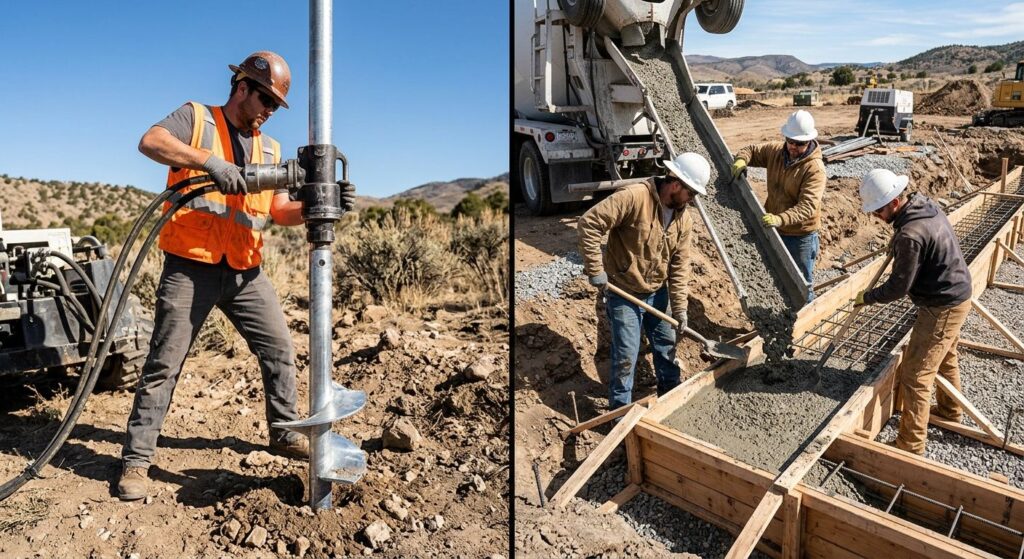
Table of Contents
- Screw Piles vs. Concrete Foundations: Which Is Right for Your Littleton Project?
- Rocky Mountain Steel Piering: Over 30 Years of Foundation Expertise
- Comparing Screw Pile and Concrete Foundation Features Side by Side
- Cost Considerations for Screw Piles vs. Concrete in Colorado
- Making the Decision: Screw Piles or Concrete for Your Foundation
- Taking the Next Step with Your Foundation Project
Screw Piles vs. Concrete Foundations: Which Is Right for Your Littleton Project?
For Littleton commercial projects, the benefits of screw piles vs concrete include up to ~66% faster installation in poor soils, minimal site excavation, and immediate load-bearing, no cure time required. Screw piles, or helical piers, are steel shafts with welded helical plates that can be mechanically coupled to reach stable, load-bearing strata. Rocky Mountain Steel Piering’s custom-engineered configurations, single, double, triple, or quadruple helix arrangements with varying plate diameters and extension lengths, adapt precisely to diverse soil conditions, meeting ASTM A153 corrosion resistance standards. This modular design eliminates the heavy excavation, large spoils, and curing delays typical of concrete foundations, reducing job site disruption and accelerating project timelines. Choosing the right foundation is critical, partnering with a specialist who has decades of hands-on expertise ensures your project is built on a solid decision.
Key Takeaways
- Our understanding of the differences between screw pile and concrete foundation methods for commercial and residential projects is built on more than three decades of hands-on field experience across Littleton, Denver, and the Front Range.
- Knowing how screw piles measure up against concrete allows commercial construction pros to see what kind of foundation will work for their projects.
- It should be noted that cost can affect the choice of the type of foundation which will be used.
- Colorado is a place where the long-term performance of a commercial structure depends upon quick installation, verified load capacity, and how the foundation system adapts to unique soil conditions.
Rocky Mountain Steel Piering: Over 30 Years of Foundation Expertise
Our understanding of the differences between screw pile and concrete foundation methods for commercial and residential projects is built on more than three decades of hands-on field experience across Littleton, Denver, and the Front Range. Family-owned since 1996, we have grown from a local Littleton foundation repair company into a regional authority, backed by A+ BBB accreditation and a steadfast commitment to engineered reliability. The helical support systems we install feature solid steel hubs with welded circular plates, then undergo a Class B1 hot-dipped galvanizing process meeting ASTM A153 to provide lasting corrosion resistance in Colorado’s variable soils. Each pier can be engineered with varied plate diameters, thicknesses, and extension lengths to match site-specific soil profiles, and the modular design permits immediate loading without any cure time, accelerating construction schedules. All installations are executed by our trained, certified installers, whose expertise ensures precise placement, predictable load-bearing capacities, and minimal disruption to the surrounding site—critical for both commercial and residential projects. With this foundation of expertise and engineered systems, we can now clearly compare the key differences between screw pile and concrete foundation solutions.
Comparing Screw Pile and Concrete Foundation Features Side by Side
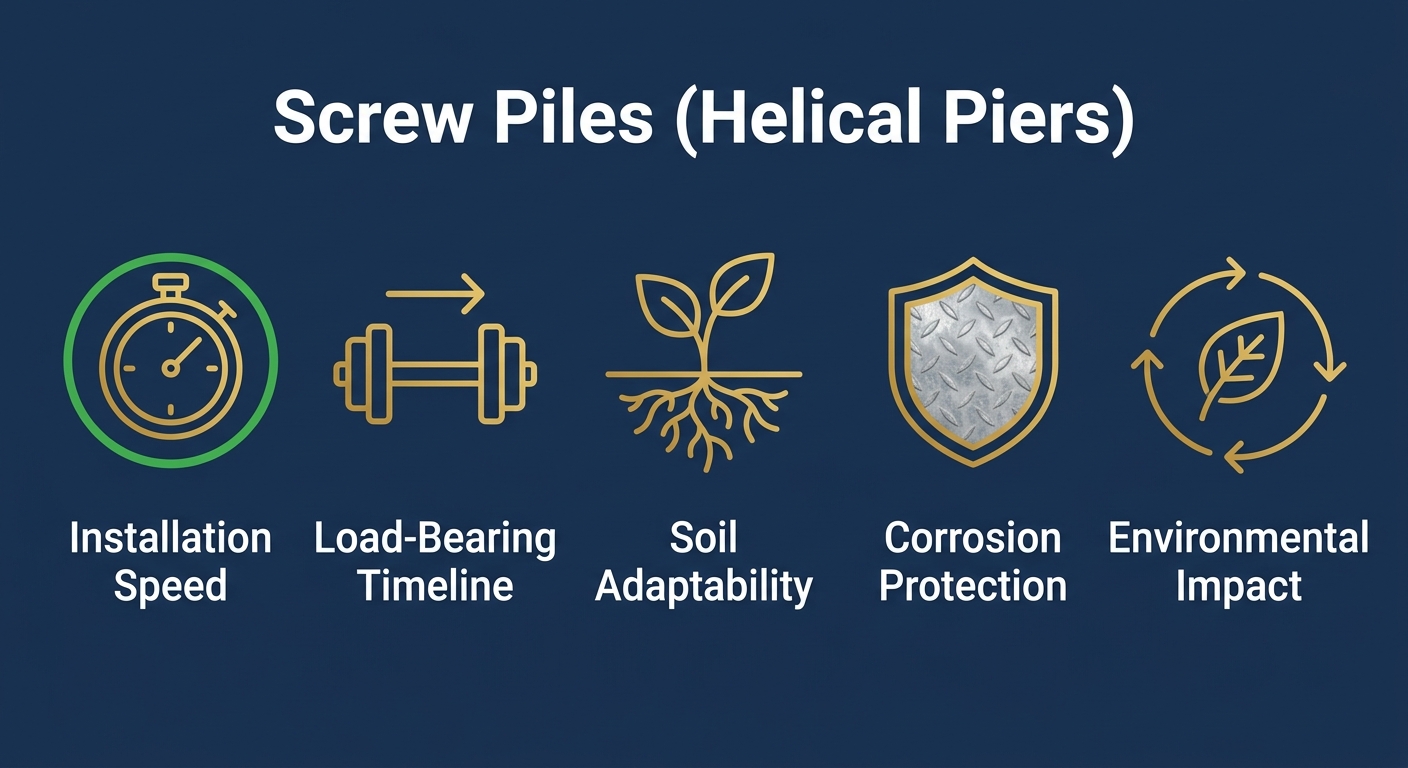
Knowing how screw piles measure up against concrete allows commercial construction pros to see what kind of foundation will work for their projects. Our MacLean/Dixie helical piles are another good option.
| Feature | Screw Piles (Helical Piers) | Concrete Foundations |
|---|---|---|
| Installation Speed | Installed in one day with immediate readiness | Requires excavation, forming, pouring, and days of curing |
| Load-Bearing Timeline | Can bear load immediately after installation | Must cure before reaching full load capacity |
| Soil Adaptability | Suitable for diverse soils; can be extended to stable strata | Requires consistent bearing capacity or soil improvement |
| Corrosion Protection | Class B1 hot-dipped galvanized steel (ASTM A153) | Rebar within concrete, potentially vulnerable in corrosive environments |
| Environmental Impact | Minimal site disturbance, no concrete waste, recyclable steel | High carbon footprint, excavation waste, and material spoils |
This allows your commercial project to avoid the downtime associated with concrete curing.
This means that each of those foundations has different costs associated with their construction, which will be examined next.
Cost Considerations for Screw Piles vs. Concrete in Colorado
It should be noted that cost can affect the choice of the type of foundation which will be used. In addition to the quoted material costs there may also be additional expenses associated with construction such as construction time lines, testing requirements and design options.
| Cost Category | Screw Piles (Helical Piers) | Concrete Foundations |
|---|---|---|
| Curing/Setup Time | Immediate loading; no curing required | Requires curing time (typically 7-28 days) |
| Installation Speed | Up to ~66% faster in poor soils | Slower; weather-dependent |
| Customization | Customizable plate diameters, shaft sizes, and helix configurations | Varies by project—custom quote required |
The modular design of helical pier systems means each element can be specified to match actual site conditions, as our product configurations allow selecting plate diameters and shaft extensions that directly target project load requirements. Installation torque measurements verify capacity in real time, so there is no waiting on concrete test cylinders or third-party lab reports. Our experience confirms that superior performance in installation of helix pier systems comes from this immediate, verifiable feedback loop that reduces expensive over-engineering. With a clearer picture of the costs involved, you can now weigh the factors.
Making the Decision: Screw Piles or Concrete for Your Foundation
Colorado is a place where the long-term performance of a commercial structure depends upon quick installation, verified load capacity, and how the foundation system adapts to unique soil conditions.
Our high-strength steel screw piles support the full design load immediately after installation, eliminating the days or weeks of waiting required for concrete to cure.
After we’ve installed our piles, we’ll check how much weight they can take on by monitoring the installation torque as well as using some sort of soil-specific coefficient. We can further confirm this real-time verification with rigorous ASTM D1143 axial compression testing.
We customize each helical pier to your project’s exact requirements, from single to quadruple helix configurations on square or pipe shafts. They have adjustable plate diameters and thicknesses ranging from 6 to 15 inches. We’ll make sure that the pier’s geometric configuration will be consistent with the soil bearing pressures and loads at your site location.
While traditional concrete piles involve significant digging, formwork, and the need for a special curing area, we’re able to insert our helical pile into soil to its final position, in pieces, driving each section down until we reach our bearing layer. This process requires no excavation spoils removal and creates minimal site disturbance.
Keep all this in mind, then go ahead and build your foundation.
Screw Piles vs. Concrete: FAQ
What are the main environmental advantages of using screw piles over concrete for site stabilization?
The main advantages are minimal site disturbance, no concrete waste, and recyclable steel. Screw piles require no excavation spoils removal and avoid the high carbon footprint, excavation waste, and material spoils associated with concrete foundations.
How does the installation speed of screw piles compare to traditional concrete foundations?
Screw piles can be up to roughly 66 percent faster in poor soils, often installed in one day with immediate readiness. Concrete foundations require excavation, forming, pouring, and multiple days of curing, which extends project timelines.
Why are screw piles considered more reliable in unstable or expansive soil conditions than concrete?
Screw piles are modular and can be extended through unstable soil to reach competent bearing strata, adapting to diverse and expansive conditions. Concrete foundations need consistent bearing capacity or soil improvement, making screw piles a more reliable choice in variable soils.
Do screw piles offer immediate load-bearing capacity compared to the curing time required for concrete?
Yes, screw piles provide immediate load-bearing capacity upon installation. High-strength steel supports the full design load right away, eliminating the typical 7- to 28-day curing period required for concrete to reach full strength.
Taking the Next Step with Your Foundation Project
Now that you understand the benefits of screw piles vs concrete, the next step is to get a custom quote from Rocky Mountain Steel Piering. Call 303-471-1155 or email [email protected] during business hours (Monday–Friday, 8 a.m.–5 p.m.) to request a quote. Our family-owned company, established 1996, uses trained certified installers. Website information is for general informational purposes only and may be updated without notice. Estimates are preliminary and not binding until confirmed in writing after an on-site inspection. We do not guarantee specific results; outcomes depend on site conditions. We recommend consulting a licensed structural engineer for definitive design recommendations; by contacting us you consent to our Privacy Policy and to receive communications.
Schedule Your On-Site Inspection
Now that you’ve compared the benefits of screw piles vs concrete, it’s clear that helical piers offer immediate loading, faster installation, and minimal site disruption for your Littleton project. Our family-owned company, established 1996, brings over three decades of hands-on foundation expertise to every job. Our trained, certified installers use MacLean/Dixie helical piers with customizable configurations that match your specific soil and load requirements. An on-site inspection is the most reliable way to get an accurate quote tailored to your project’s timeline and budget. We’ll assess your site, answer your questions, and provide a preliminary estimate with no obligation. Taking this step ensures your foundation decision is supported by professional insights you can trust. Contact us today to schedule your inspection and move your project forward with confidence.
Schedule Your On-Site Inspection