
How to Prevent Frozen Pipes From Damaging Foundations: Expert Tips
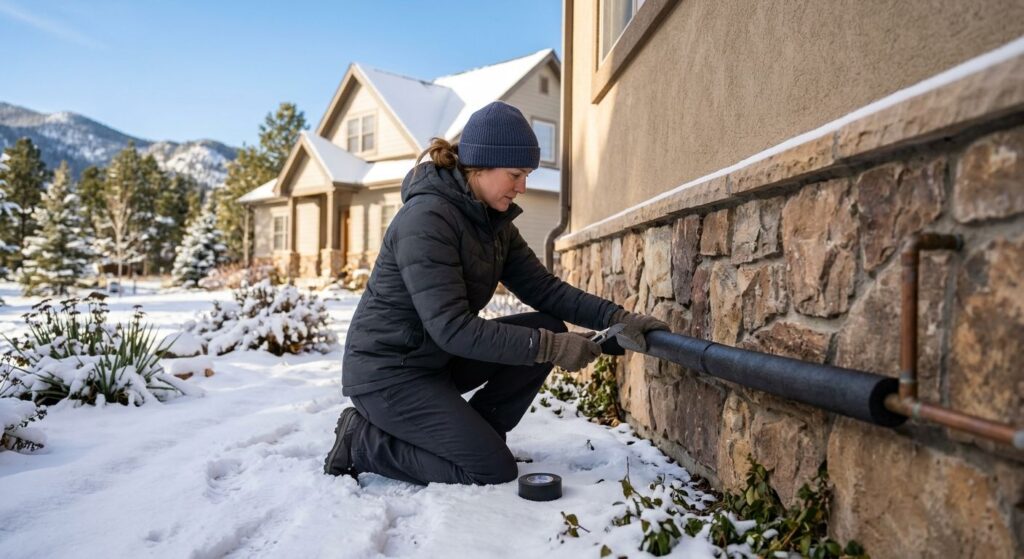
Table of Contents
How to Prevent Frozen Pipes from Damaging Your Foundation
If you want to know more about how to avoid foundation damage caused by frozen pipes, the answer lies in insulating exposed pipes as well as filling any cracks or other openings that let cold air into your house. This approach reduces the risk of soil shifting under your foundation, which can lead to costly structural issues.
It matters as to whether there’s insurance to pay for this damage. Sudden plumbing leaks may be covered, while damage from gradual freezing cycles typically isn’t. We’ve had to help many home owners who were caught between having to spend money fixing the problem themselves, and arguing with their insurance company over the damage caused. To prevent damage, start by checking your pipes, sealing any gaps in exterior walls or foundations, and keeping your house warm before winter arrives.
Key Takeaways
- To be safe before learning how to prevent frozen pipes from damaging foundations, make sure you’ve taken enough steps ahead of time to protect yourself.
- If you want to know how to prevent frozen pipes from damaging foundations, insulation is the place to start.
- After insulating exposed pipes in Step 1, the next layer of protection is sealing the foundation envelope.
- When foundation cracks and air leaks have been fixed then the next moisture problem should be on the lower side of the house.
- This can help prevent water from accumulating around your walls, which might lead to structural problems including damage to the foundation, etc.
Before You Begin
To be safe before learning how to prevent frozen pipes from damaging foundations, make sure you’ve taken enough steps ahead of time to protect yourself. Reviewing your HO-3 insurance policy with your carrier will show what is covered if one of your pipes burst underneath your home. Standard policies generally cover sudden water damage and tear-out costs to access the pipe, but they typically exclude the pipe itself unless you’ve added a service line endorsement.
Make photos of your basement’s foundation and your plumber’s pipe work, and identify which pipes are most at risk before the first frost. This preparation ensures you’re ready to act fast when cold weather arrives. Insurers expect homeowners to act quickly to mitigate damage once a leak is discovered, so documenting conditions up front with these images will strengthen any future claim. If your policy offers endorsements such as "hidden water damage" coverage, ask about adding them now to avoid surprises later.
After those tasks have been finished, there are steps that can be taken.
Step 1: Insulate Exposed and Vulnerable Pipes
If you want to know how to prevent frozen pipes from damaging foundations, insulation is the place to start. Pipes along exterior walls, in crawl spaces, garages, and other unheated areas are most at risk of freezing and bursting. Use foam pipe sleeves or wrap insulation to cover vulnerable sections, securing it tightly at joints and elbows to eliminate gaps.
While insulation can help minimize heat loss in the home, it does not guarantee that pipes won’t freeze during severe cold weather. Hence, you should also seal up air gaps along the house’s foundation. According to legal information sources, homeowners generally have a duty to mitigate water damage promptly if a pipe does burst. Most policies under the HO-3 category typically cover sudden interior water damage, but they may not pay for repairs to the broken pipe. Always check with your insurance company before filing a claim.
Step 2: Seal Foundation Cracks and Air Leaks
After insulating exposed pipes in Step 1, the next layer of protection is sealing the foundation envelope. We recommend inspecting visible hairline cracks in basement or crawlspace walls, gaps around pipe penetrations, sill plates, and utility entry points where cold air and moisture can intrude.
Hairline cracks and small gaps should be sealed with flexible caulk; large spaces at penetration points need to be filled in with foam sealant. Preventing these holes minimizes the amount of cold air coming through and reduces moisture accumulation, which could make freeze/thaw damage worse during the winter months. While sudden plumbing leaks that erode soil and crack foundations may be covered by insurance, earth movement exclusions often deny damage from clay soil expansion — so prevention steps like sealing matter. Check your insurance policy to learn exactly what’s and isn’t covered.
Sealing keeps cold air out, but moisture in the ground and crawl space remains a threat, setting up Step 3’s coverage of moisture and vapor barriers.
Step 3: Install Moisture and Vapor Barriers in Crawl Spaces
When foundation cracks and air leaks have been fixed then the next moisture problem should be on the lower side of the house. Adding a vapor barrier on the crawl space floor and up part of the foundation will keep ground moisture from getting into your house. Overlap seams by at least six inches and seal them with vapor-rated tape or mastic to block moisture migration entirely.
In addition to what was completed in Step 2, these barriers will also maintain a drier, more temperature-stable environment beneath your house. When combined with insulation or conditioned air, they help keep plumbing lines above freezing during cold snaps, reducing the risk of burst pipes that can damage foundations.
For homes with significant moisture issues, we recommend consulting a professional foundation contractor. Barriers are a critical defense, but they’re not a complete solution on their own.
Step 4: Maintain Exterior Drainage and Soil Grading
This can help prevent water from accumulating around your walls, which might lead to structural problems including damage to the foundation, etc. We suggest that you grade the soil at a slight angle towards the yard instead of having the land slope into your house, because you don’t want all this moisture running down through the wall, toward your foundation.
Extend your downspouts at least five feet from your home’s foundation wall and make certain that all water from your gutters drains away from the house, rather than toward the building. This will help keep moisture out of the clay soils under houses located here, as well as elsewhere in the Denver metropolitan area.
Earth-movement damage due to clay soil movement in the ground would likely be excluded under most insurance policies and therefore maintenance will be required on a regular basis to prevent uncovering the repair bill for damages to your home. Insurance companies can be contacted to inform you if any type of drainage related damage has been excluded from the terms and conditions of your policy before making any repairs.
Step 5: Winterize Outdoor Plumbing and Hose Bibs
The best way to prevent frozen pipes from damaging foundations is to winterize outdoor plumbing before Colorado’s first hard freeze. In our experience serving homes in Littleton and Denver, a burst outdoor pipe can dump hundreds of gallons of water against your foundation wall, eroding soil and compromising stability.
Start by disconnecting garden hoses and draining exterior lines completely. Then close the inside valves that control the water flow to them and drain out whatever water might be in their lines. Once that’s done, cover exposed spigots with insulated covers. Lastly, seal gaps where pipes enter the foundation wall to block cold drafts.
No matter how many precautions you take, pipes fail at times. In these cases, knowing what to do in the early minutes after the failure occurs—shutting off the main water supply and calling for emergency repairs—can limit foundation damage and help your insurance claim process move more smoothly.
Step 6: Act Quickly After a Pipe Bursts
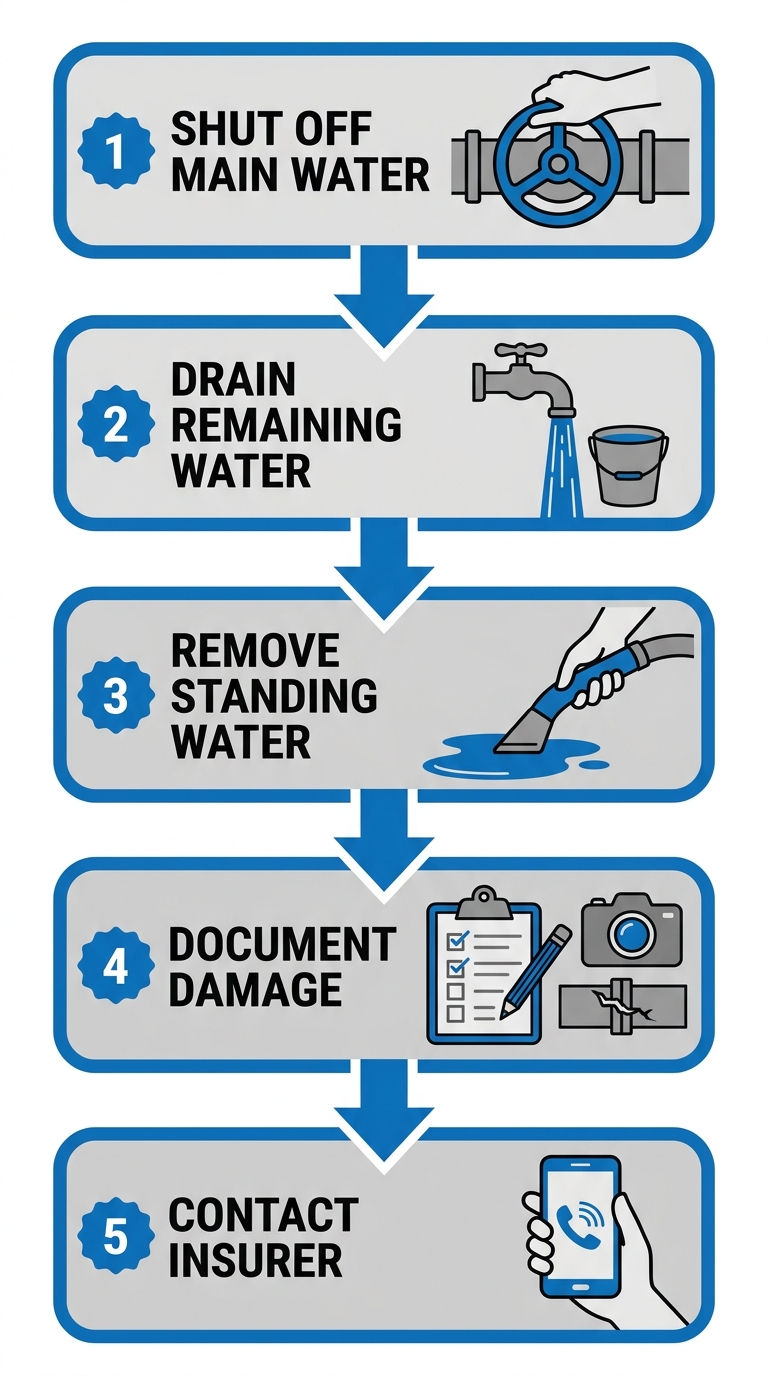
Even pipes that have been winterized may burst under some circumstances, particularly if a pipe has burst underneath or in proximity to your home’s foundation. What happens over these first several hours determines your home’s safety and your insurance claim. According to LegalClarity’s breakdown of homeowners policy terms, you have a contractual duty to mitigate damage immediately after discovering a leak to protect your coverage. This is what is known as mitigating loss.
In the first hour, shut off the main water supply, drain any remaining water, and remove standing water near the slab. Once you’ve gotten rid of as much water as possible, take pictures and write down the extent of the damage on paper – this documentation helps prove that it did happen. Most HO-3 policies will help pay for damages if a pipe bursts suddenly, but they don’t cover the expense of getting the pipe fixed. Act fast, though: it reduces out-of-pocket exposure and preserves your insurer’s assessment of covered losses.
Don’t begin slab tearout or foundation work prior to having the insurance company look at the damage. Unauthorized repairs can jeopardize your claim.
Step 7: Schedule a Professional Foundation Inspection
The next logical course of action following a burst-pipe incident would be to have your house’s foundation inspected by professionals. Because water from a frozen-pipe event can undermine soil stability and shift load-bearing points, documenting the damage’s extent and root cause in writing is vital if you wish to have the situation covered under your home owners’ insurance policy.
We inspect foundations throughout Littleton and the Denver metro area to determine whether water intrusion has compromised structural integrity. After our inspection, we write up a report stating whether there was sudden water damage or water issues that occurred over time, such as soil expanding around the structure. Keep in mind that, when claims are approved, they typically cover the resulting water damage, but policyholders are still responsible for costs above structural coverage limits after the deductible.
Contact us today to arrange a preliminary estimate during our regular business hours, Monday–Friday, 8:00 AM–5:00 PM.
Troubleshooting Frozen Pipe and Foundation Problems
Many Colorado homeowners experience problems such as cracked walls or warped floor levels following a deep freeze and wonder whether a pipe under the slab has burst. We see these issues across the Denver Metro Area when temperatures drop and clay soils contract, stressing foundations. Start by locating the source of the problem: check for water stains, damp spots, or unusually cold areas on floors near exterior walls.
When your policy insures your home, it usually will pay the money required to clean up the mess after you’ve torn off the drywall to expose the damaged pipe. It probably won’t cover anything to fix that pipe. That endorsement can add about $10,000 to $25,000 in coverage for roughly $30 to $100 a year in premiums, so reviewing options with your agent is worthwhile. An anti-concurrent causation clause could complicate matters if there’s evidence that earth movement contributed to the damage. Such clauses can complicate claims even if a covered pipe burst was the initial cause.
If there’s reason to believe that any of your pipes in your foundation have burst or frozen, take swift action to stop any further damage. Turn off the main water valve, take photos as proof that these parts of the property have been damaged, then get in touch with a licensed plumber to locate and fix this problem. As soon as the immediate issue has been addressed, the next priority is protecting your foundation before the next deep freeze.
Contact us for a professional assessment of any freeze-related foundation damage. Estimates are preliminary and confirmed after on-site inspection, so we can provide guidance tailored to your home’s specific needs.
Frequently Asked Questions
How do frozen pipes cause structural damage to a home’s foundation?
Frozen pipes can burst and release large volumes of water against foundation walls. The resulting water erosion undermines soil stability and shifts load-bearing points, compromising the foundation’s structural integrity.
What steps can I take to seal foundation cracks and prevent cold air from reaching pipes?
Inspect visible hairline cracks in basement or crawl space walls and gaps around pipe penetrations. Seal small cracks with flexible caulk and larger spaces with foam sealant to block cold air and moisture intrusion.
Does insulating pipes in crawl spaces help protect the foundation from water damage?
Insulating pipes in crawl spaces reduces the risk of freezing and bursting, which can release water that erodes soil and damages foundations. It also helps maintain a more stable temperature environment beneath the house.
How does moisture from burst pipes lead to long-term foundation instability and soil erosion?
Burst pipes release water that saturates soil, causing it to expand and contract. This movement erodes soil stability, shifts load-bearing points, and creates hydrostatic pressure against foundation walls, leading to instability over time.
Should I have a foundation inspection if I have experienced burst pipes near my home’s structure?
Yes, a professional foundation inspection documents the extent of damage and its root cause. This is essential for insurance claims and to determine whether sudden water damage or gradual soil movement has compromised structural integrity.
Protect Your Foundation Before the Next Deep Freeze
Understanding how to prevent frozen pipes from damaging foundations is the best way to protect your home this winter. Even with diligent preparation, deep freezes can still test your home’s defenses, making proactive action essential.
Make sure that you review your homeowner’s insurance before the next cold front passes through. Some policies offer foundation damage protection for sudden plumbing leaks, but earth movement from soil expansion is typically excluded. By knowing if your policy covers this prior to a freeze, you will be able to avoid frustration.
If you think there may be foundation damage or would like to have peace of mind about the structural integrity of your home, call the professionals at Rocky Mountain Steel Piering. We offer inspections for problems that could arise during winter conditions for homes located in the Denver Metro Area. Give us a call at +1 303-471-1155 to book your evaluation now!
Schedule Your Foundation Inspection Today
You now have a complete prevention plan, from insulating exposed pipes and sealing foundation cracks to installing crawl space moisture barriers and maintaining exterior grading. Acting before the next deep freeze is far easier than repairing damage after it. If a pipe does burst, quick mitigation protects both your home and your insurance claim. Once the emergency is handled, a professional inspection can document what the water did to your foundation. Our team at Rocky Mountain Steel Piering has served homeowners in Littleton, Colorado since 1996, including the surrounding Denver metro area. We can evaluate freeze-related cracking and seal it with proven epoxy injection methods before winter worsens it. Call us at +1 303-471-1155, Monday through Friday from 8:00 AM to 5:00 PM, to request your on-site evaluation.
Schedule Your Foundation Inspection Today