
Horizontal Basement Wall Cracks: Essential Homeowner Guide
Table of Contents
- Horizontal Basement Wall Cracks: A Homeowner’s Guide
- Causes of Horizontal Cracks in Basement Walls
- Structural Risks of Horizontal Foundation Cracks
- Recognizing Foundation Issues: Stair-Step Cracks and More
- Professional Repair Options for Horizontal Basement Cracks
- Monitoring Cracks and Knowing When to Act
- Protecting Your Home’s Foundation Long-Term
Horizontal Basement Wall Cracks: A Homeowner’s Guide
Horizontal basement wall cracks in your home are a red flag that should never be ignored. Unlike vertical cracks that often result from normal concrete shrinkage, horizontal cracks signal that the foundation wall is bowing inward under lateral soil pressure or hydrostatic pressure. These are among the most serious signs of foundation issues a homeowner can encounter.
The consequences of ignoring foundation cracks can range from water seepage to complete wall collapse. While stair-step cracks in brick veneer often appear alongside horizontal wall cracks, the latter is a direct sign of wall failure that demands immediate attention. In our 30 years as a family-owned and operated company since 1996, we have seen how prompt evaluation prevents minor wall movement from becoming a major structural emergency.
We recommend contacting a qualified foundation repair professional or a licensed structural engineer for an inspection as soon as a horizontal crack is discovered. In the following sections, we explore the specific causes and proven repair techniques for horizontal wall cracks.
Consult a licensed structural engineer or qualified professional for definitive diagnosis and design recommendations.
Causes of Horizontal Cracks in Basement Walls
Among the most concerning types of foundation damage are horizontal basement wall cracks, which often signal significant structural stress. Unlike vertical shrinkage cracks that typically result from concrete curing, horizontal cracks indicate that the wall is bowing inward under lateral pressure. These fissures, sometimes referred to as horizontal basement wall cracks, are a structural red flag—an unmistakable sign that the foundation is under duress and demands immediate attention from a qualified professional.
Hydrostatic pressure from water-saturated soil is the most common culprit behind horizontal basement wall cracks. When the ground surrounding a foundation becomes saturated after heavy rain or snowmelt, it exerts tremendous lateral force against basement walls. Expansive clay soils compound this problem; as they absorb moisture, they swell and press even harder against the concrete. This soil-structure interaction is well-documented in civil engineering standards published by the American Society of Civil Engineers, which outline how lateral earth pressure must be accounted for in foundation wall design. In colder regions, frost heave introduces another seasonal threat—frozen soil expands and pushes against the wall, creating horizontal cracking that may worsen with each freeze-thaw cycle. Additionally, improper backfill or poor compaction during original construction leaves walls unsupported and more vulnerable to these natural pressures. At Rocky Mountain Steel Piering, Inc., we routinely identify these underlying causes during on-site inspections across the Denver metro and Front Range region.
Horizontal cracks are among the most obvious signs of foundation issues and should never be dismissed as cosmetic. These cracks differ markedly from stair-step cracks in brick veneer or block walls—a related but distinct pattern that also indicates foundation movement. Because horizontal basement wall cracks compromise the structural integrity of the entire wall assembly, a licensed structural engineer’s assessment is essential. For a definitive diagnosis, consult a licensed structural engineer. Once the cause is identified, the appropriate repair method can be determined. We follow guidelines from the concrete repair professional organization to ensure high-quality, lasting repair work. In the next section, we explain how we address these issues with engineered solutions such as tiebacks and helical piers.
Structural Risks of Horizontal Foundation Cracks
Among the various foundation crack types, horizontal cracks stand out as the most structurally dangerous. Horizontal basement wall cracks may signal serious structural problems that require immediate professional evaluation from a qualified structural engineer. Unlike cosmetic surface cracks, these horizontal fractures indicate that external forces are actively stressing your foundation walls.
Why Horizontal Cracks Form
Horizontal cracks develop when saturated soil exerts lateral pressure against basement walls, a phenomenon known as hydrostatic pressure. Poor drainage around the foundation allows water to accumulate in the soil, expanding it and pushing inward with tremendous force. In our experience as a family-owned and operated since 1996 foundation repair company, walls at mid-height or along mortar joints are particularly vulnerable to this pressure and may indicate imminent structural failure.
Comparing Crack Types
Understanding different crack patterns helps homeowners assess urgency. Vertical cracks typically result from concrete shrinkage during curing and rarely indicate structural concerns. Stair-step cracks in brick veneer often accompany foundation settlement but follow mortar joints in a predictable pattern. Horizontal cracking, however, directly signals wall deflection under load and demands attention. This critical distinction separates cosmetic imperfections from genuine structural threats.
Warning Signs to Watch For
Recognizing the signs of foundation issues helps you act before minor problems become major structural failures. Problematic horizontal cracks frequently appear alongside several troubling indicators:
- Bowing or inward-leaning basement walls visible to the naked eye
- Sticking doors and windows on upper floors as the frame distorts
- Water seepage through the crack, indicating active hydrostatic pressure
- Cracks wider than 1/4 inch or showing progressive widening
According to guidelines from RMS Scontractors’ internal FAQ, any horizontal crack exceeding 1/4 inch or accompanied by wall displacement requires evaluation. Engineering News-Record (ENR) reports that industry best practices consistently recommend structural engineer assessment when these warning signs appear.
If structural risks are confirmed, the next step involves evaluating repair options, including helical pier installation cost, which varies with site conditions and project scope. Consult a licensed structural engineer for a definitive assessment before pursuing any repair solution.
Recognizing Foundation Issues: Stair-Step Cracks and More
Once you know why foundation issues matter, the next step is recognizing them before they escalate. Among the most telling signs of foundation issues are horizontal basement wall cracks, which often point to lateral soil pressure pressing against your foundation. Homeowners in the Front Range should pay close attention to horizontal cracks in basement walls, especially after freeze-thaw cycles, because they can indicate that expansive soils are exerting force beyond what the wall was designed to handle.
Stair-step cracks in brick are another classic indicator of differential foundation settlement. These diagonal fractures follow the mortar joints in brick veneer, creating a staircase pattern that signals one section of the footing has dropped relative to the rest of the structure. Not every crack means your foundation is failing—hairline shrinkage fractures are common and typically cosmetic—but stair-step cracks wider than 1/8 inch deserve a professional inspection.
Equally important to watch for are doors and windows that suddenly stick or refuse to latch, sloping or uneven floors, and gaps forming around window frames or in corner moldings. Water seepage along foundation walls often accompanies these symptoms, especially when horizontal basement wall cracks allow moisture to push through. While vertical cracks may result from normal concrete curing, horizontal basement wall cracks present a more urgent concern because they demonstrate active lateral loading against the wall.
Our FAQ on foundation repair signs provides additional detail on what to look for, and our crack chasing and sealing FAQ explains when sealing is appropriate after a proper assessment. In sinkhole-prone regions, homeowners may benefit from adding Tower Hill Insurance sinkhole coverage to their policy for specialized protection, as detailed in our insurance FAQ.
Consult a licensed structural engineer or qualified professional for definitive diagnosis and design recommendations. Early detection can significantly reduce scope and complexity of repairs, saving time.
Now that you can spot common issues, learn how we can fix them.
Professional Repair Options for Horizontal Basement Cracks
When horizontal basement wall cracks appear, they signal structural distress that demands professional, engineered solutions rather than quick cosmetic fixes. Unlike vertical cracks often caused by concrete shrinkage, horizontal cracking typically indicates excessive lateral soil pressure or foundation settlement—both serious signs of foundation issues that can compromise your home’s safety. In stair-step cracks in brick veneer, the pattern usually follows mortar joints and suggests differential settlement, but horizontal cracks through poured concrete or block walls require immediate structural attention.
Once a horizontal crack has been identified as a sign of serious foundation stress, several professional repair methods can be deployed. The appropriate solution depends on soil conditions, wall movement, and loading requirements determined through engineering analysis.
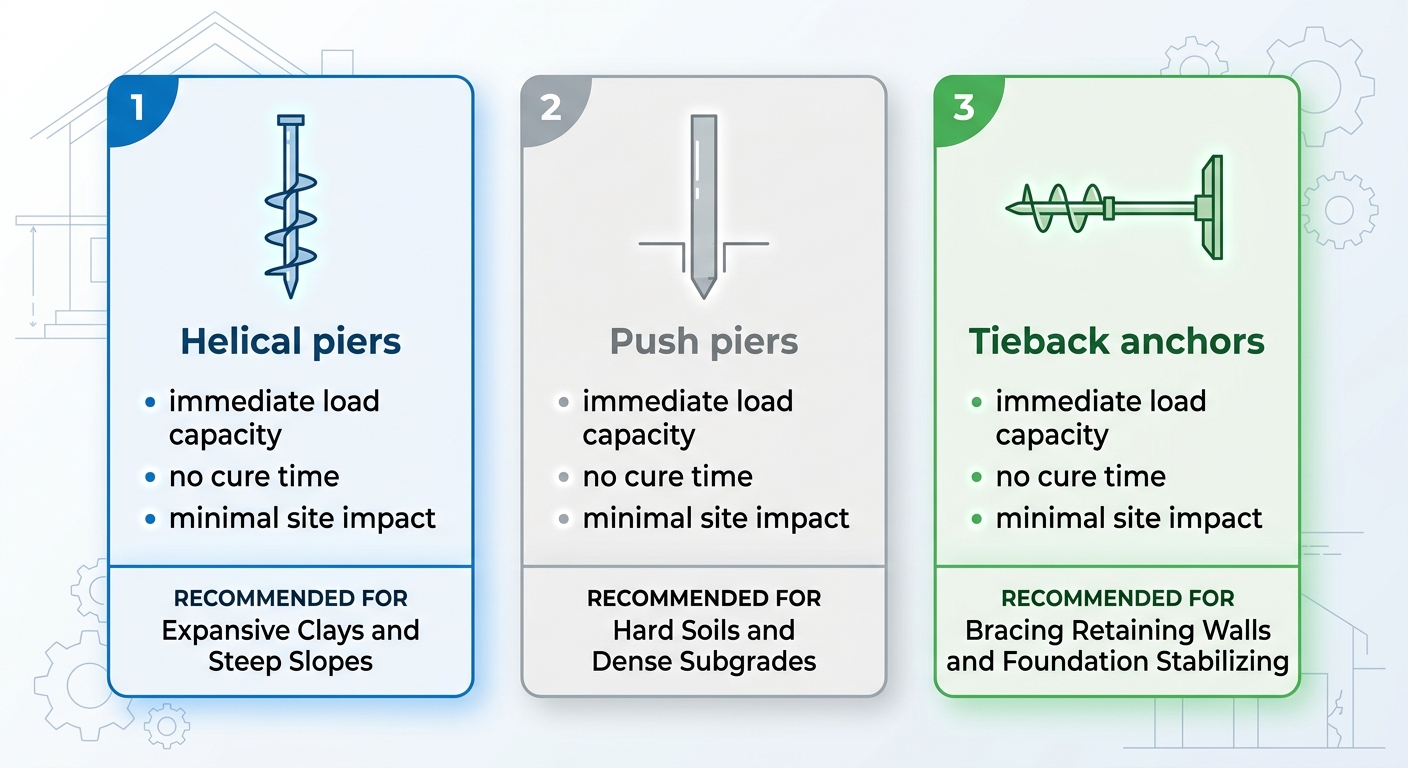
Three-method horizontal basement crack repair comparison
Helical piers are a primary solution for foundation settlement accompanying horizontal cracking. These steel shafts with helical bearing plates transfer structural loads to stable, load-bearing soil well below the active zone. According to our internal analysis, helical piers offer distinct advantages: they provide immediate load capacity with no cure time required and can be installed in limited-access areas where larger equipment cannot operate. Push piers, by contrast, rely on the structure’s weight and require a concrete footing connection that may delay load transfer. This makes helical piers particularly effective when horizontal basement wall cracks result from settlement in poor soil conditions.
For walls experiencing active lateral movement, tiebacks or earth anchors offer another professional option. These systems are drilled through the foundation wall into stable soil beyond the active failure wedge, then tensioned to counteract inward wall pressure. Tiebacks can be installed from inside the basement, minimizing exterior excavation and site disturbance.
All repair plans should adhere to the guidelines published by the American Society of Civil Engineers for foundation evaluation and repair. The International Concrete Repair Institute provides authoritative standards for concrete crack repair procedures, from surface preparation through injection techniques and quality control—ensuring that repairs meet industry best practices rather than relying on guesswork.
We recommend a thorough on-site inspection by a licensed structural engineer to determine the best repair strategy for your home. As a family-owned and operated since 1996 company with A+ BBB accreditation, we bring trained installers and extensive experience with both helical pier installations and tieback systems. Each method has specific installation requirements and cost variables, which we cover next.
Monitoring Cracks and Knowing When to Act
Monitoring horizontal basement wall cracks is essential for protecting your home’s structural integrity because these cracks often signal lateral pressure from expanding soil or water-saturated ground. Unlike vertical cracks that frequently result from normal concrete shrinkage, horizontal cracking indicates the foundation wall is experiencing inward force that can lead to bowing and eventual failure.
We recommend establishing a consistent monitoring routine to track changes over time. Use a pencil to mark the crack’s endpoints and measure the width with a ruler or crack gauge at several points along the fracture. Record these measurements monthly and note any seasonal variations, particularly after heavy rainfall or freeze-thaw cycles. Look for wall bowing or inward leaning by holding a straightedge or level against the wall and checking for gaps. Also note any water seepage, efflorescence, or damp spots that accompany the cracking.
A crack wider than 1/8 inch warrants evaluation by a licensed structural engineer, who can determine whether the movement is active and recommend appropriate stabilization measures. Hairline horizontal cracks may be cosmetic but still require periodic monitoring for enlargement.
Horizontal basement wall cracks differ from stair-step cracks in brick, which typically follow mortar joints in a staircase pattern and indicate foundation settlement rather than lateral soil pressure. Both crack types can be serious, but their causes and repair methods differ substantially. Additional signs of foundation issues that should prompt further investigation include doors and windows that stick or won’t latch, gaps forming around window and door frames, and noticeable slopes or unevenness in floors.
Seek immediate professional evaluation if you observe:
- Rapid crack widening over days or weeks
- Wall displacement or visible inward movement
- Multiple horizontal cracks appearing in the same wall section
- Bulging or pronounced bowing of the wall
- Sticking doors or windows that develop suddenly
Our team performs crack chasing and sealing services only after structural stabilization has been completed and verified. We do not apply cosmetic repairs to actively moving walls because sealing alone cannot address the underlying pressure. After a structural engineer provides a definitive diagnosis and design recommendations, we can execute the required stabilization and then restore the wall surface.
Consult a licensed structural engineer or qualified professional for definitive diagnosis and design recommendations.
If monitoring reveals concerning changes in your foundation walls, contact RMS Foundation Solutions for a professional inspection and repair plan. As a family-owned and operated company since 1996, we bring decades of experience to foundation stabilization throughout the Front Range.
Protecting Your Home’s Foundation Long-Term
Ultimately, early detection of problems in horizontal basement wall cracks is one of the most important steps homeowners can take to safeguard their property. We often see that seemingly minor issues, when left unaddressed, develop into extensive structural concerns requiring major intervention. Warning indicators like in signs of foundation issues and stair-step cracks in brick typically signal that moisture or soil pressure is already compromising the wall assembly. According to the National Society of Professional Engineers, consulting a licensed professional engineer is recommended for a definitive assessment whenever these patterns appear, ensuring the repair approach matches the underlying cause.
As The Experts in Steel Piers and a family-owned and operated since 1996 company with A+ BBB accreditation, we bring decades of specialty experience to every project. To secure your home’s stability, contact us for a custom quote and an on-site inspection tailored to your foundation’s condition.
Resources
- Discover the Dangers of Ignoring Foundation Cracks
- Find RMS Foundation Repair Contact Information
- Contact RMS for Construction Services Consultation
- Use RMS Contact Form for Project Consultation
- Navigate RMS Website to Find Company Details
- Schedule an RMS Construction Consultation Today
- Access RMS Navigation and Contact for Projects
- Explore ASCE Professional Development and Resources
- Discover ICRI Concrete Repair Certifications and Training
- Join NSPE for Engineering Ethics and Career Growth
- Get ENR Construction News and Top Rankings