
Stair-Step Cracks in Brick: Signs of Foundation Problems
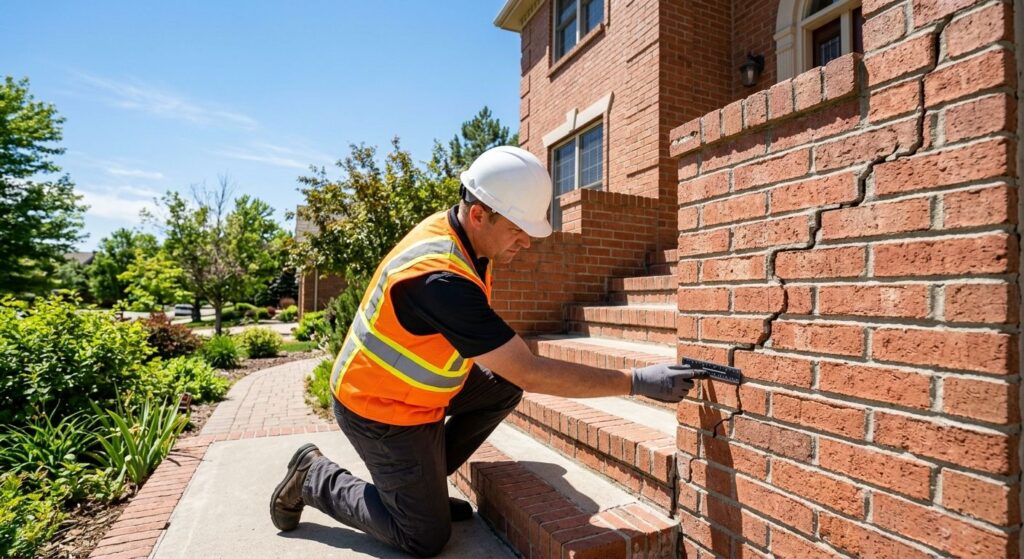
Table of Contents
- Understanding Stair-Step Cracks in Brick
- What Stair-Step Cracks Reveal About Your Foundation
- Settlement vs. Shrinkage Cracks: Identifying the Difference
- How to Address Stair-Step Cracks: Inspection and Repair Methods
- When Stair-Step Cracks Signal Serious Structural Issues
- Common Questions About Foundation Cracks Answered
- Protecting Your Home’s Foundation: Next Steps
Understanding Stair-Step Cracks in Brick
Beyond simple hairline cracks, one of the most distinctive patterns is the stair-step crack in brick. These diagonal fractures follow the mortar joints in a zigzag pattern, creating a stepped appearance that is unmistakable once you know what to look for. In Colorado, stair-step cracks in brick frequently develop because of the region’s expansive clay soils, which swell when wet and shrink when dry. This seasonal movement can cause uneven foundation settlement—the primary driver of stair-step cracking.
Unlike superficial hairline shrinkage cracks, stair-step cracks are typically wider than 1/8 inch, show displacement, and can allow moisture intrusion and pest entry, worsening over time. Horizontal foundation cracks are a different problem, often caused by lateral soil pressure, but horizontal basement wall cracks represent a more extreme manifestation of the same forces and also require professional evaluation. Stair-step cracks are among the most telling signs of foundation problems, and they should never be ignored.
Because these cracks point to underlying settlement, a professional evaluation is essential. We can perform an on-site inspection to determine the exact cause and recommend an engineered solution—such as helical piers or tieback systems—that can stabilize the foundation and stop further damage. While no outcome can be guaranteed without a thorough evaluation, early intervention often helps prevent more extensive structural issues. As always, a licensed structural engineer should be consulted for definitive diagnosis.
Once identified, properly addressing stair-step cracks requires a foundation repair strategy tailored to the underlying settlement.
What Stair-Step Cracks Reveal About Your Foundation
When homeowners notice stair-step cracks in brick veneer, it’s more than just a cosmetic blemish—it’s one of the most telling signs of foundation problems. Stair-step cracks travel along mortar joints in a distinctive stepped pattern, signaling that the underlying foundation is settling or moving. Unlike typical hairline cracks from concrete shrinkage, these cracks demand immediate attention to prevent structural damage.
The table below compares common crack types to help you assess severity.
| Aspect | Stair-Step Cracks | Horizontal Cracks | Vertical Shrinkage Cracks |
|---|---|---|---|
| Typical Cause | Foundation settlement or wall movement | Lateral soil pressure, frost, or bowing | Material curing, thermal contraction |
| Appearance | Stepped pattern along mortar joints | Continuous horizontal line, often straight | Thin, hairline, often straight |
| Location | Brick veneer, often near corners or openings | Basement walls, mid-height to upper section | Walls, ceilings, mortar joints |
| Severity Indicator | Often moderate to high; may signal ongoing settlement | High-risk; can indicate bowing or failure | Low risk; aesthetically concerning but rarely structural |
| Repair Approach | Underpinning (helical piers), tiebacks, epoxy injection | Tiebacks, wall anchors, carbon fiber straps | Cosmetic patching, routine maintenance |
While stair-step cracks in brick typically point to foundation settlement, horizontal foundation cracks are a different animal. Unlike vertical shrinkage cracks that rarely threaten stability, horizontal cracks arise from lateral soil pressure, expanding clay, or frost heave—forces that can bow a basement wall inward. For example, horizontal basement wall cracks often result from hydrostatic pressure and may require tieback systems. Our researchers explain these mechanisms in detail, confirming that cracks wider than 1/4 inch demand professional evaluation. We often repair stair-step cracks using helical pier underpinning to lift and stabilize settling corners, while horizontal concerns call for tiebacks or carbon fiber reinforcement. Because expansive clay soils common across Colorado’s Front Range exacerbate settlement, we’ve seen how swift action stops small cracks from progressing into major structural failures.
Determining whether stair-step cracks are active or dormant requires monitoring over time, but we recommend a professional inspection if you see cracks wider than 1/4 inch, continued movement, or signs like sticking doors and windows. For a definitive diagnosis, consult a licensed structural engineer. However, our experienced team can assess the visible damage and recommend appropriate helical pier or tieback solutions based on decades of Front Range soil conditions. Many Littleton and Denver-area homes sit on expansive clay, making proactive foundation stabilization a wise investment. Addressing these signs of foundation problems early not only protects your home’s value but also prevents more costly repairs down the road.
As The Experts in Steel Piers, we’ve installed thousands of helical piers and tiebacks across Littleton, Denver, Douglas County, Greenwood Village, Centennial, and surrounding Colorado communities since 1996. If you’ve noticed stair-step cracks in your brick veneer, contact us for a custom quote and inspection—no project is too large or small.
Settlement vs. Shrinkage Cracks: Identifying the Difference
Homeowners often wonder whether cracks in brickwork signal serious structural issues. Distinguishing settlement cracks from shrinkage cracks avoids unnecessary alarm and directs proper repairs. Stair-step cracks in brick are among the most common signs of foundation problems, while hairline mortar fissures typically remain cosmetic. Knowing these differences helps Colorado property owners decide when to call a professional.
Identifying Settlement-Driven Cracks
A stair-step pattern following mortar joints often indicates foundation settlement. These cracks typically exceed 1/8 inch, appear near corners, windows, or doors, and can accompany sticking doors or binding windows. In Colorado, expansive soils and poor compaction frequently trigger such movement.
To help property owners distinguish between these crack types, we’ve compared their key characteristics below:
| Aspect | Settlement Cracks | Shrinkage Cracks |
|---|---|---|
| Cause | Foundation settling into soil, often due to poor compaction or soil movement | Mortar or brick drying and contracting, material shrinkage |
| Appearance | Stair-step along mortar, often wider than 1/8 inch | Hairline, uniform, less than 1/16 inch |
| Location | Near corners, windows, doors; may extend from foundation to roofline | Random pattern, often in middle of walls or ceilings |
| Severity | High – indicates ongoing movement; needs structural evaluation | Low – cosmetic; often stable after curing |
| Repair Approach | Underpinning (helical piers), tiebacks, epoxy injection | Routine patching, sealant, repointing |
The table underscores that settlement cracks demand structural evaluation, not just cosmetic sealing. We anchor foundations with helical piers and tiebacks, and seal cracks with epoxy injection. Professional foundation repair in Colorado often combines underpinning and sealing to halt movement and restore stability.
Recognizing Shrinkage Cracks in Brick and Mortar
Shrinkage cracks are very fine, with widths consistently less than 1/16 inch. They result from the natural drying and contraction of mortar or brick during curing or from thermal expansion and contraction cycles. Unlike settlement cracks, they are not linked to foundation movement and therefore pose minimal structural risk. You might see them randomly across a wall or ceiling, often in the center of a masonry panel. Because they are cosmetic, routine repointing and a quality sealant are usually sufficient to restore appearance and prevent moisture ingress. For additional waterproofing, we can apply epoxy injection, but in most cases a licensed professional’s evaluation is recommended to confirm that no hidden settlement exists. We serve homeowners throughout Littleton, Greenwood Village, and Centennial, and can assess whether your hairline cracks are benign.
The Role of Horizontal Cracks in Structural Assessment
Horizontal foundation cracks in poured concrete or block walls point to lateral pressure, not vertical settlement. This pressure often comes from hydrostatic forces after heavy rains, swelling expansive soils, or frost heave during Colorado’s freeze-thaw cycles. Improper backfilling during construction can also leave walls susceptible. As cracks develop and walls bow inward, the risk of failure grows.
According to the American Society of Civil Engineers (ASCE), evaluating crack patterns and wall deflection is essential to determine repair urgency. We frequently see horizontal cracks accompanied by water intrusion or significant bowing, which warrant immediate professional assessment. While our helical pier and tieback systems can stabilize bowing walls, a structural engineer should direct the remediation design.
Horizontal cracks often require immediate structural intervention, which we will discuss in the next section. If you notice such cracks in your basement, contact RMS Structural Solutions for a thorough inspection. As a family-owned and operated company since 1996, we bring decades of experience to every project. All information is for general informational purposes and does not replace the advice of a licensed structural engineer.
How to Address Stair-Step Cracks: Inspection and Repair Methods
Once you have identified stair-step cracks in brick, the next step is to determine the best way to address them. This section outlines the inspection process and repair options available. Because these cracks often indicate underlying movement, a professional evaluation is always the first and most critical step.
The Professional Inspection Process: What to Expect
Stair-step cracks are common signs of foundation problems, and a thorough inspection by a licensed structural engineer is essential to pinpoint the root cause. The typical process includes:
- A visual assessment that documents crack location, pattern, and wall displacement
- Crack-width measurement with feeler gauges or crack monitors to establish a baseline
- Monitoring over several weeks or months to detect progressive movement
- Soil and foundation evaluation to identify settlement, lateral pressure, or expansive clay issues
- A detailed engineer’s report with findings and recommended repair methods
During an inspection, a structural engineer follows standards set by the civil engineering professional society (ASCE). We at Rocky Mountain Steel Piering always recommend consulting an independent engineer before finalizing any repair plan.
Consult a licensed structural engineer or qualified professional for a definitive diagnosis and repair plan.
Epoxy Injection and Crack Stitching
For non-structural cracks that do not result from ongoing settlement, epoxy injection offers a reliable sealing solution. Our team injects a high-strength epoxy into the crack to restore the wall’s integrity and prevent water intrusion. This method is effective for hairline to moderate cracks, but it only bonds the crack surfaces — it does not correct any underlying foundation movement. If the crack is actively widening, other stabilization methods are necessary. We provide epoxy injection as one of our many repair services, but we always stress that it must be paired with structural solutions when settlement is present.
Helical Piers and Tiebacks for Foundation Stabilization
When stair-step cracks in brick result from settlement, helical piers are often the most effective long-term solution. Our helical pier system drives deep, galvanized steel shafts through unstable soil layers until they reach load-bearing strata, then brackets transfer the foundation’s weight onto the piers. This approach bypasses Colorado’s expansive bentonite clay — a primary driver of seasonal heave and settlement described in our foundation repair resources. For horizontal foundation cracks caused by lateral earth pressure, we install tieback anchors. These anchors extend through the wall and into stable soil beyond the active zone, applying tension to counteract inward bowing. Our project portfolio includes hundreds of successful tieback installations across the Front Range.
The table below compares common repair methods, including the engineered solutions we use to permanently stabilize foundations.
| Method | Best For | Process | Cost Consideration | Longevity |
|---|---|---|---|---|
| Epoxy Injection | Non-structural cracks, crack stitching | Inject epoxy into crack, allow to cure | Low to moderate; depends on crack length | Years; may need reapplication if movement continues |
| Helical Piers | Settlement-driven stair-step cracks, sinking foundations | Drive helical piers to load-bearing soil; attach bracket to foundation | Higher upfront; permanent solution with minimal disruption | Decades; corrosion-resistant galvanized steel |
| Tiebacks | Horizontal cracks, bowing basement walls | Install anchor through wall into stable soil; tension system | Moderate to high; requires excavation or drilling | Long-term; withstands lateral pressure |
| Polyurethane Foam Lifting | Minor settlement, slab lifting, crack sealing | Inject expanding foam beneath slab or into voids | Moderate; quick application | Years; not for deep foundation settlement |
Costs are estimates; contact RMSSCO for a custom quote. Longevity depends on site conditions and proper installation.
When Stair-Step Cracks Signal Serious Structural Issues
While many stair-step cracks are cosmetic, certain indicators demand immediate attention. The following severity table helps homeowners quickly assess whether their stair-step cracks require emergency intervention.
| Indicator | Low Risk | Moderate Risk | High Risk |
|---|---|---|---|
| Crack Width | < 1/16 inch | 1/16 – 1/4 inch | > 1/4 inch, especially if increasing |
| Pattern | Vertical hairline, single crack | Stair-step pattern, intermittent | Stair-step + horizontal combo, diagonal through bricks |
| Location | Center of wall, not near structural supports | Near windows, corners, or doors | Along foundation wall, beaming, or load-bearing elements |
| Associated Signs | None | Sticking doors/windows, minor floor unevenness | Bowing walls, water leaks, structural tilting |
In Littleton and the greater Denver area, stair-step cracks in brick can range from harmless hairline fractures to signs of deeper structural movement. When a crack remains under 1/16 inch wide with no associated symptoms, it is generally low-risk—often a vertical hairline or single crack away from load-bearing supports. However, if the crack widens to between 1/16 and 1/4 inch and you notice signs of foundation problems like sticking doors or minor floor unevenness, the condition moves into the moderate-risk category. These developments warrant closer monitoring and professional assessment to prevent escalation.
When stair-step cracks in brick exceed 1/4 inch—especially if they are widening—they demand immediate attention. As defined by ASTM technical standards, crack widths greater than 1/4 inch indicate a high risk of structural compromise. When this width is accompanied by bowing walls, water intrusion, or structural tilting, it signals urgent foundation movement that could threaten your home’s safety. The presence of horizontal foundation cracks alongside a stair-step pattern is an even more dire warning: this combination indicates lateral pressure that demands immediate evaluation.
When a stair-step crack is identified as high-risk, professional repair methods such as helical piers or tiebacks may be required. At Rocky Mountain Steel Piering, Inc., we have served Littleton and the Front Range since 1996, bringing deep expertise in foundation stabilization to every project. Consult a licensed structural engineer or qualified professional for definitive diagnosis and design recommendations.
Common Questions About Foundation Cracks Answered
Now that you understand the types of foundation cracks, here are answers to common questions we receive from Colorado homeowners.
What are stair-step cracks in brick?
Stair-step cracks in brick veneer are diagonal mortar joint fractures from differential settlement. Minor cracks can be cosmetic; we recommend monitoring, but widening cracks require professional inspection.
What causes horizontal foundation cracks?
Horizontal foundation cracks result from expansive soil pressure pushing walls inward. These serious structural issues need immediate professional evaluation.
What are the signs of foundation problems?
Common signs of foundation problems include sticking doors/windows, uneven floors, gaps around frames, and moisture seepage. Any of these should be inspected.
For a thorough inspection and custom repair solution, contact RMS today. We provide custom quotes after an on-site inspection and always recommend consulting a licensed structural engineer for definitive diagnosis.
Protecting Your Home’s Foundation: Next Steps
- Never seal stair-step cracks or horizontal foundation cracks without a professional diagnosis.
- Monitor the crack width monthly using a simple ruler.
- Contact RMS for a free on-site inspection and estimate.
Our certified installer will assess your foundation’s movement in Colorado’s expansive soils and recommend the right repair, such as our immediate-loading helical pier system. As a family-owned and operated company since 1996, we deliver minimal site impact and predictable results.
The Experts in Steel Piers are ready to restore your home’s stability. Ready to start your construction project? Call us today to schedule your evaluation.