
Sticking Doors and Windows: Signs of Foundation Settlement
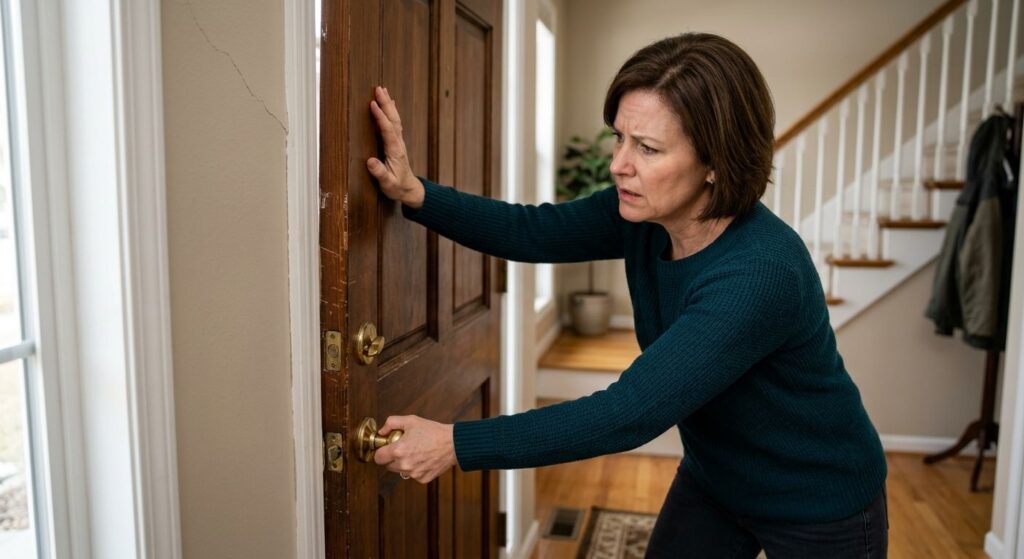
Table of Contents
- Sticking Doors and Windows in Denver Homes: A Foundation Warning Sign
- Assessing Your Home for Signs of Settlement
- Check for Binding at the Top Corner of Your Door or Window
- Measure Gaps Around Doors and Windows for Clearance
- Look for Accompanying Signs of Foundation Movement
- Inspect for Stair-Step Cracks in Brick Veneer
Sticking Doors and Windows in Denver Homes: A Foundation Warning Sign
Beyond visible cracks, sticking doors and windows are another common warning sign that your Denver-area home may be experiencing foundation settlement. This happens when foundation movement distorts the frame, causing doors and windows to bind or become difficult to operate.
In Colorado, our expansive clay soils are a primary culprit. These soils swell when wet and shrink during dry periods, leading to differential settlement that puts uneven pressure on your home’s structural weak points. Often, sticking doors and windows occur alongside diagonal drywall cracks above door frames – a more obvious indicator of foundation settlement. While seasonal humidity can cause minor, temporary sticking, persistent operational problems are strong signs of foundation settlement that warrant a professional foundation inspection.
Homeowners should also watch for stair-step cracks in brick mortar, which we cover next. If your doors or windows are consistently sticking, we recommend you consult a licensed structural engineer for a definitive diagnosis.
Assessing Your Home for Signs of Settlement
Early detection is key to preventing extensive structural damage in your home. When you know what to look for, you can identify potential issues before they become major repairs. Several common signs of foundation settlement begin as subtle clues, including drywall cracks, doors that stick or jam, and visible cracking in exterior brickwork along the Front Range of Colorado.
Drywall cracking is often the most noticeable symptom. A vertical crack above a door frame is typically cosmetic and caused by normal wood framing settlement, not foundation sinking. However, diagonal drywall cracks above door frames are more frequently linked to differential foundation movement. In the corners of a new house, minor cracking can result from normal drying shrinkage, but any diagonal crack that widens or reappears after a patch warrants closer monitoring.
Beyond drywall, sticking doors and windows often accompany settlement. As the foundation shifts, frames torque out of square. Similarly, stair-step cracks in brick mortar joints are a classic external indicator of foundation movement. We recommend tracking any crack’s width over time; progressive sticking or widening signals the need for a thorough on-site assessment by a licensed professional.
Check for Binding at the Top Corner of Your Door or Window
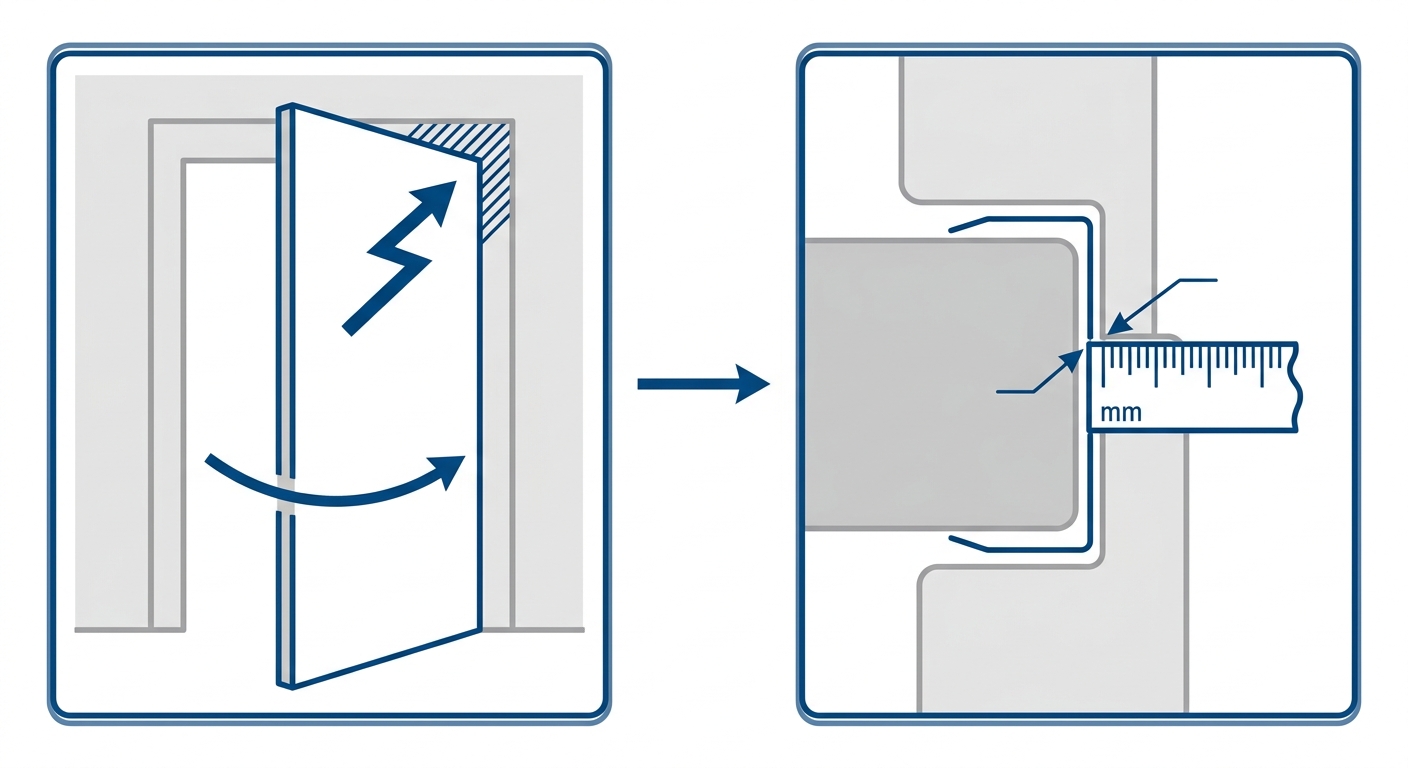
One of the most telling signs of foundation settlement is sticking doors and windows. When framing shifts due to differential settlement, doors and windows can begin to bind at the top corner—a symptom we frequently see in our foundation repair assessments in the Denver metro area. Binding at the top corner may accompany diagonal drywall cracks above door frames, which we discuss in detail separately.
- Open and close the door or window slowly. As it approaches the fully closed position, feel for any resistance or rubbing at the top corner. A smooth operation without catching indicates the frame remains square; binding suggests the frame has twisted.
- Inspect the gap between the top edge and the frame. Measure the space at both sides of the top corner. If the gap narrows significantly on one side or shows a pinched appearance, the frame has likely shifted.
- Look for accompanying clues above the opening. Diagonal drywall cracks radiating from the top corner, particularly if they’ve widened over time, reinforce settlement as the cause rather than seasonal humidity changes.
These findings, combined with other indicators like stair-step cracks in brick, warrant a professional foundation evaluation.
Measure Gaps Around Doors and Windows for Clearance
Before assuming sticking doors and windows are due to humidity, measure the gaps around the frame. Assessing these clearances is a straightforward DIY diagnostic for uncovering subtle structural movement in homes across Littleton and the Denver metro area. Functional shifts in door and window operation are often reliable indicators—even when visible cracks are not yet apparent—and uneven gaps are among the classic signs of foundation settlement.
We recommend using a tape measure to check the vertical gap between the top of the door frame and the wall on both the hinge and latch sides. A difference of 1/8 inch or more suggests the frame is no longer plumb. For windows, compare the gap at the top of the sash to the gap at the bottom; a tapering clearance that narrows at the top may indicate foundation settlement pulling the wall inward. Check both interior and exterior doors separately, as exterior doors are more directly affected by ground contact. Mark the current gap with a pencil line on the frame and re-measure after a week of dry weather; if the gap changes, active movement is occurring. Stair-step cracks in brick veneer often accompany irregular door gaps, and according to our internal guide on drywall cracks, a diagonal crack above the door frame combined with an uneven gap solidifies the case for foundation settlement.
For authoritative standards on measurement protocols, consult civil engineering professional resources such as the American Society of Civil Engineers (ASCE). If your measurements vary more than 1/8 inch, we strongly recommend contacting a licensed structural engineer for a definitive diagnosis.
Look for Accompanying Signs of Foundation Movement
In addition to stair-step cracks in brick on the exterior, homeowners should also watch closely for interior clues that point to deeper structural issues. One of the most common early warnings is sticking doors and windows in Colorado homes, where expansive clay soils frequently cause subtle foundation shifts. Other key signs of foundation settlement include noticeable gaps between walls and ceilings or floors, sloping or uneven floor surfaces, and drywall cracks radiating from door frames. A single symptom does not always confirm a serious problem—seasonal moisture changes can cause minor movement—but when several of these indicators appear together, the likelihood of progressive settlement increases. Because accurate diagnosis requires specialized expertise, we recommend arranging a professional evaluation to determine whether permanent stabilization is necessary. For further authoritative guidance, explore concrete repair professional resources from ICRI.
Inspect for Stair-Step Cracks in Brick Veneer
In addition to sticking doors and windows, one of the clearest signs of foundation settlement is a stair-step crack in your brick veneer. These distinctive cracks follow a zigzag pattern along the mortar joints—rather than cutting cleanly through the bricks themselves—and are often a visible result of differential foundation movement. We recommend inspecting both interior and exterior brick walls thoroughly, using a flashlight to identify consistent patterns of jagged cracking that may otherwise be hard to spot.
Not every stair-step crack signals a structural emergency, but a pattern that is consistent or widening warrants professional attention. We advise having any suspect cracks evaluated by a licensed structural engineer who can interpret the movement and its root cause. Industry organizations such as the International Concrete Repair Institute (ICRI) publish widely recognized guidelines for crack assessment and concrete repair. For standardized measurement and evaluation guidelines, refer to ASTM international standards resources. Once a stair-step crack is identified and professionally assessed, the next step is determining the appropriate repair approach to restore lasting stability.
Evaluate Window Jamming and Seasonal Effects
Sticking doors and windows are among the most noticeable signs of foundation settlement that homeowners encounter, but these problems can also occur without structural movement. In Colorado, we see two distinct seasonal patterns: windows and doors that bind during wet periods and release during dry spells, or persistent jamming that continues year-round regardless of weather conditions.
We recommend tracking when the difficulty occurs. Seasonal sticking often results from expansive clay soils absorbing moisture and swelling, pressing unevenly against foundation walls. Our experience shows that when the soil dries and contracts, normal operation returns. Persistent sticking doors and windows that worsen over time indicate a different mechanism entirely: differential settlement creating permanent structural misalignment. Cracks wider than 1/8 inch, recurring drywall cracks at door corners, and gaps forming around window frames all support this diagnosis.
Other related indicators merit attention, including stair-step cracks in brick veneer and diagonal drywall cracking at frame corners, which our internal FAQ addresses as common settlement symptoms. ASTM International provides industry standards that licensed professionals reference when evaluating window installation and performance, though only a structural engineer can definitively determine whether settlement is responsible.
If jamming persists beyond seasonal cycles, a licensed structural engineer can determine the cause.
Consider Environmental Factors Like Humidity and Soil Moisture
Sticking doors and windows are another common concern, but it is important to first consider environmental factors before jumping to conclusions. Seasonal humidity changes frequently cause wood doors and windows to expand and contract. During periods of high humidity, wood absorbs moisture and swells, which can make doors and windows temporarily difficult to open. In dry conditions, wood shrinks, which can also lead to a poor fit and sticking. In Colorado’s climate, wood shrinkage is common during winter and dry summer months, while swelling may occur during wet spring months.
Soil moisture fluctuations can also induce foundation movement that leads to more persistent sticking doors. After heavy rain or extended drought, the expansive clay soils prevalent in our area may heave or settle, causing subtle shifts in a home’s structure. This movement can result in sticking that does not resolve when the weather changes. To help distinguish causes, we recommend looking for accompanying signs of foundation settlement, such as stair-step cracks in brickwork or uneven floors. If sticking worsens over time and appears alongside these other settlement indicators, the issue may be structural rather than environmental.
Temporary sticking doors and windows are common in humid months, but persistent problems warrant a closer look. If your doors and windows continue to bind after accounting for humidity and soil moisture, contact us for a professional evaluation. As a family-owned and operated company since 1996, we have the expertise to determine whether your home requires foundation repair.
Decide Next Steps: When to Call a Foundation Professional
If you’ve noticed sticking doors and windows in your Colorado home, it’s natural to wonder whether you’re dealing with a simple seasonal shift or something more serious. Understanding the difference can save you time and prevent costly structural issues down the road.
Small, isolated hairline cracks in drywall are common in new construction and typically result from lumber drying or normal settling. However, when sticking doors or windows appear alongside other indicators such as uneven floors, the situation warrants closer attention. Stair-step cracks in brick that follow mortar joints on exterior walls often signal differential settlement. Likewise, multiple signs of foundation settlement—such as recurring drywall cracks wider than 1/8 inch, gaps around window frames, or doors that suddenly jam—strongly suggest underlying structural movement.
Any combination of these red flags means it’s time to contact a foundation professional. Our family-owned and operated team at Rocky Mountain Steel Piering, Inc. is ready to assess your concerns. Remember to consult a licensed structural engineer or qualified professional for definitive diagnosis and design recommendations.
What to Do When the Door Still Sticks After Adjustments
If you’ve planed the door, adjusted the hinges, and still face sticking, the trouble often runs deeper. Persistent sticking, especially with sticking doors and windows elsewhere in the home, points to foundation settlement shifting the door frame.
Look for these crack patterns above the door:
- Vertical cracks: A single hairline vertical crack may be cosmetic, but multiple or widening cracks are concerning. Our vertical crack FAQ explains the difference.
- Diagonal cracks: Cracks that radiate from the door corners typically signal differential foundation movement. Our diagonal crack guide details why these are more serious.
- Stair-step cracks in brick: This classic pattern in brick or block walls is a strong settlement indicator.
Also check other doors and windows. Multiple sticking openings confirm a broader issue. These are early signs of foundation settlement that shouldn’t be ignored.
Even in new construction, some settling is normal, but doors that keep sticking after the first year may reflect structural problems. Our new construction crack guide helps you know when to worry.
Only a licensed structural engineer can definitively diagnose foundation movement, but a professional assessment from a foundation repair specialist is the right next move. This information is for general educational purposes—always consult a licensed structural engineer for a definitive diagnosis. Rocky Mountain Steel Piering, Inc. provides free estimates (subject to on-site inspection) to homeowners in Littleton, Denver, and surrounding Colorado areas.
Ready to stop wrestling with your doors? Contact us today for a professional evaluation. As a family-owned and operated company since 1996, we deliver honest guidance and expert stabilization when it’s needed.
Protecting Your Denver Home with Professional Foundation Evaluation
When sticking doors and windows begin disrupting daily life in your Denver home, it’s time to consider a thorough evaluation. This subtle friction can be one of the earliest and most recognizable signs of foundation settlement, often accompanied by stair-step cracks in brick veneer, uneven floors, or visible gaps around window frames. While some cracking can be purely cosmetic, only a trained expert can distinguish superficial blemishes from structural movements that demand engineered solutions. At Rocky Mountain Steel Piering, Inc., our evaluations follow rigorous industry guidelines, including those championed by the American Society of Civil Engineers (ASCE) and the International Concrete Repair Institute (ICRI), to ensure every visible settlement indicator is correctly interpreted against best practice standards.
A professional evaluation goes beyond a simple visual check; it involves analyzing Colorado’s expansive clay soils that fuel differential settlement across the Front Range, paired with soil and load analysis to uncover the true scope of movement. As a family-owned and operated business since 1996 with an A+ BBB rating, we prioritize honest inspections that inform precise repair plans rather than pushing unnecessary work. Once a professional evaluation identifies the underlying cause, targeted repair solutions can be applied.