
What Time of Year Is Best for Foundation Repair: Expert Guide
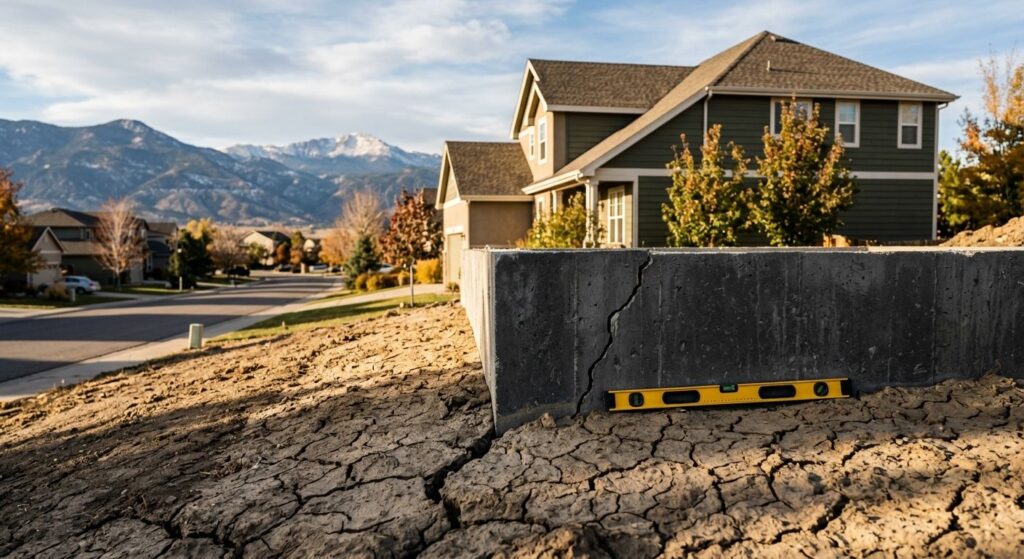
Table of Contents
Understanding Foundation Repair Timing in Colorado
Coloradans frequently ask what time of year is the best for foundation repair. The answer is understanding Colorado’s expansive bentonite clay. Throughout the Front Range, soils expand when saturated and contract when dry. They subject foundations to constant movement throughout the seasons. From the research provided by Kenna Real Estate, the key to foundation repair is the timely management of water. Repairs should be planned around seasonal moisture changes. Repairs planned during the dry season allow for the best and most stable conditions for pier installation and transfer of load. Stable conditions allow for repairs to be planned with a higher level of certainty. The dry season in Colorado also provides the most predictable and stable soil conditions.
Key Takeaways
- According to KENNAR Real Estate, Colorado’s Front Range soils contain high concentrations of bentonite clay that swells when wet and shrinks when dry.
- Colorado’s Front Range has bentonite-rich clay soils that change volume dramatically with changes in moisture content.
- One source notes, the clay soil of Colorado’s Front Range is expansive bentonite clay.
- That same immediate load-bearing capability translates into decades of reliable service when the installation addresses the unique challenges of Colorado’s Front Range.
- Protecting the value of your home means taking steps to preserve its structural integrity.
1. Plan Around Soil Moisture Cycles
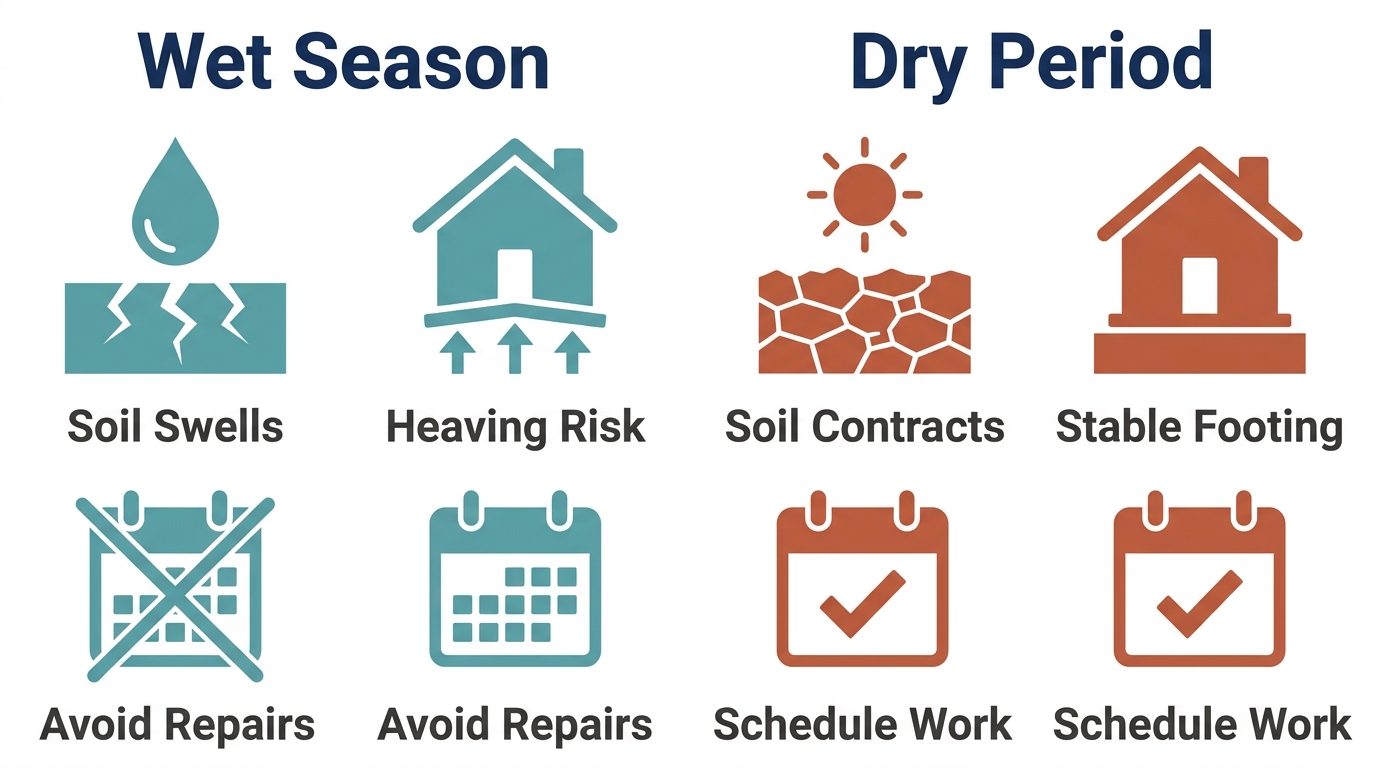
According to KENNAR Real Estate, Colorado’s Front Range soils contain high concentrations of bentonite clay that swells when wet and shrinks when dry.
When snow melts in spring or monsoon rains arrive in summer, the clay absorbs moisture and expands, exerting upward pressure on foundation walls. In contrast, prolonged dry spells cause the clay to contract and pull away, leaving gaps that can lead to settlement.
Plan foundation repairs around Colorado’s bentonite clay moisture cycles
We recommend planning around soil moisture cycles by scheduling foundation repairs for the drier months, when expansive clays are less prone to swelling. For ongoing protection, careful moisture management—including proper grading and downspout extensions that direct water 5 to 10 feet away—helps reduce seasonal movement.
- Avoid Weather-Related Delays
When considering what time of year is best for foundation repair, Colorado’s weather patterns can make or break your schedule. Even with careful soil moisture management, heavy rain or a late freeze can force unexpected delays.
Rain saturates expansive bentonite clay, making excavation unsafe and concrete placement impractical. Our crews may need to pause until the ground dries, adding days to the timeline and affecting how long foundation repair takes. Building contingency days into the project plan absorbs these interruptions. Freezing temperatures slow concrete curing drastically; scheduling work between late spring and early fall helps avoid freeze-related setbacks.
Proper grading and downspout extensions that carry water away from the foundation, as recommended,also reduce the chance that a sudden storm will halt work.
Once you understand how rain and cold may affect your timeline, you can look for windows when ground conditions are most favorable, helping your repair stay on track.
3. Leverage Seasonal Ground Conditions
Colorado’s Front Range has bentonite-rich clay soils that change volume dramatically with changes in moisture content. As noted, with dry and wet cycles, uneven pressures are created on building foundations. The best way to manage moisture to alleviate these pressures is through proper grading and gutter system maintenance.
Understanding these soil shifts helps us align repairs with current conditions. Our helical pier systems deliver superior performance in installation of helix pier systems, even in saturated soils, with installation rates up to ~66% faster. Because galvanized helix piers anchor below the active moisture zone, they bypass expansive surface clays. Their immediate load-bearing capacity eliminates curing delays, making foundation repairs efficient regardless of recent weather.
No seasonal rule changes take the place of an on-site evaluation by a professional. Soil conditions on any given property can be different from any other property. Therefore, we always suggest that our certified team does a complete evaluation of your property prior to doing any foundation work. This ensures the solution fits your home’s specific challenges.
4. Reduce Impact on Your Home and Landscape
One source notes, the clay soil of Colorado’s Front Range is expansive bentonite clay. This type of clay swells when wet and shrinks when dry, causing seasonal shifts that place uneven pressures against foundations. Because of this, control of moisture levels in the soil is important.
Consistent moisture management is the best defense against soil-related foundation stress. Proper grading ensures that surface water drains away from the foundation, and extended downspouts carry roof runoff at least 5 to 10 feet from the house. Keeping gutters clean and functional prevents oversaturation near the footing.
Our helical pier installations require minimal excavation compared to traditional concrete piers. The small-diameter shafts are advanced into load-bearing soil, preserving landscaping, patios, and mature trees and eliminating the need for large trenches. Helical piers immediately achieve load-bearing capacity, meaning there is no cure time and the foundation can be loaded as soon as they are installed. At Rocky Mountain Steel Piering, we have installed thousands of helical piers across the Front Range, consistently achieving minimal disturbance to homes and landscapes.
5. Ensure Immediate Load-Bearing After Installation
As noted earlier, much of the Front Range of Colorado is built on expansive bentonite clay soils. These soils are highly troublesome as they continually swell and shrink with changes in moisture content, putting constant uneven pressures on foundations, and accelerating structural distress. Helical piers immediately accept design loads after they are installed. Because there is no concrete to cure or grout to set, the repaired foundation regains its bearing capacity the moment the piers are advanced to the required torque and depth.
This immediate load-bearing capability eliminates the wait times common with concrete piers and allows us to complete foundation repair in virtually any season—even when Colorado’s soils are saturated or frozen. Homeowners gain a repair schedule that is not governed by curing conditions, which means projects can move forward without seasonal delay. The resulting stabilized foundation serves as a durable platform for the home, with the pier system contributing lasting structural performance over the long term.
6. Maximize Long-Term Value and Durability
That same immediate load-bearing capability translates into decades of reliable service when the installation addresses the unique challenges of Colorado’s Front Range. The soil across much of this region contains expansive bentonite clay — a material that swells dramatically when wet and shrinks as it dries, subjecting foundations to constant, uneven pressure. Consistent moisture management serves as the most effective defense against this cycle. Proper grading that slopes away from the structure and well-maintained gutters with extended downspouts keep water from saturating the soil near footings.
Many homeowners ask if foundation repair is worthwhile. Helical pier installation, which provides immediate, lasting stability, answers this question. As trained, certified installers, our crews complete every installation, ensuring the piers are driven to the proper depth and load capacity for long-term durability. When foundation concerns surface during a home purchase, raising them before the contract inspection objection deadline protects the transaction’s value and allows the necessary corrections to move forward without jeopardizing the closing timeline.
7. Coordinate with Landscaping and Outdoor Projects
Protecting the value of your home means taking steps to preserve its structural integrity. In the Colorado Front Range, the soil is composed of expansive bentonite clay. Soils like this swell when wet and shrink when dry, making proper grading and drainage crucial to maintaining the stability of your foundation. The best defense against foundation movement is consistent management of the water in the surrounding soil, including proper drainage and adequate grading, maintenance of gutters and downspouts (extended a minimum of 5 to 10 feet from the foundation), and other moisture-modification features. To minimize the risk of foundation movement and protect your investment, schedule foundation repairs before major landscaping to allow for the necessary re-grading and drainage work and avoid damaging recently planted landscaping. Foundation repair often requires perimeter equipment access. Proper coordination also helps you identify the ideal time for foundation work, when scheduling flexibility is greatest and conditions allow for efficient repair.
Beyond coordinating with landscaping, scheduling during the off-season adds additional flexibility. Our team is usually more available during the drier, late summer and fall months in the Colorado Front Range. During this time homeowners can better plan the start of their foundation repair to accommodate their schedules and coordinate required inspections. There is less of a chance they will need to make compromises due to schedule constraints.
Understanding local soil conditions makes the advantages of this drier window even more valuable. Much of this area is made up of expansive bentonite clay that, with the loss of moisture, will shrink and with the gain of moisture, will swell. This causes the soil to put un-even pressure on a foundation. Repairing a foundation during a stable soil moisture condition helps to give predictable soil behavior. A structural engineer foundation evaluation, a structural engineer foundation evaluation, which costs between $400 – $900, is a good first step to help evaluate the scope of work and help to time a decision prior to breaking ground.
This flexibility makes it easier to develop a seasonal foundation repair plan that fits both your property and your schedule.
Your Seasonal Foundation Repair Plan
Colorado’s Front Range soil, rich in expansive bentonite clay, swells when wet and shrinks when dry, making a seasonal foundation maintenance plan essential. Knowing what time of year is best for foundation repair in Colorado anchors that plan. Consistent moisture management through proper grading and gutters is the most effective defense. A structural engineer inspection—typically $400–$900—determines foundation condition and optimal timing, with moderate spring or fall weather reducing complications from soil movement. For a custom quote and inspection tailored to your home, contact Rocky Mountain Steel Piering at 9961 Titan Park Cir, Littleton, CO 80125 or call +1 303-471-1155. All info is general; quotes preliminary and binding after written inspection; results vary by site; your information consents to our Privacy Policy; consult a licensed structural engineer.
Schedule Your Foundation Inspection Today
You now understand how Colorado’s expansive bentonite clay soil makes timing crucial for foundation repairs. Planning around seasonal moisture cycles and drier periods can help ensure lasting results. Modern helical pier systems, which provide immediate load-bearing, make installation possible in various seasons with minimal disruption. The most reliable way to determine the optimal time for your home is with a professional on-site evaluation. Our certified installers at Rocky Mountain Steel Piering, Inc. have served the Denver metro area since 1996. We can assess your foundation’s condition and help you build a seasonal repair plan that fits your property. Contact us today to schedule an inspection and take the first step toward a stable, secure home.
Schedule Your Foundation Inspection Today