
ADU Conversion Cost Denver: Get Fast Pricing Estimates
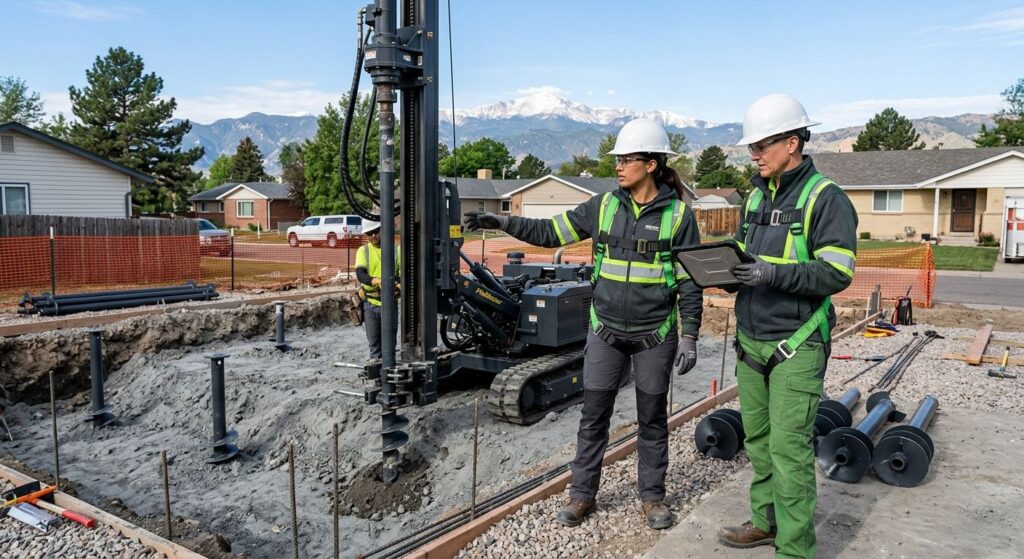
Table of Contents
- Foundation and Structural Needs for ADU Conversion in Denver
- Denver Area Foundation Profiles for ADU Projects
- Structural Services for ADU Conversion
- Local Building Codes and Climate Considerations
- Getting Started with Your ADU Conversion Quote
- Your ADU Conversion Starts with a Solid Foundation
Foundation and Structural Needs for ADU Conversion in Denver
Before estimating the adu conversion cost in Denver, the first critical step is a foundation assessment. Denver’s expansive clay soils create unique challenges that directly impact your structural requirements for any ADU project.
A licensed structural engineer must evaluate the existing slab or basement to confirm it can support the additional loads. Garage conversions often require underpinning or new footings, while a basement adu conversion cost in Denver frequently includes helical pier stabilization to bypass unstable soils. When calculating the garage conversion adu cost in Denver, helical piers or screw piles are a key investment because they anchor into load-bearing strata, providing immediate load capacity with minimal site disruption.
As a family-owned and operated company since 1996, we specialize in helical pier systems and tiebacks that are ideal for ADU foundation work. We provide custom quotes after an on-site inspection — no two projects are alike. Understanding these structural needs helps you anticipate the overall investment, which we break down next. For a detailed look at similar structural requirements, see our complete guide on home gym construction in Denver.
Denver Area Foundation Profiles for ADU Projects
Foundation conditions vary significantly across the Denver metro area and directly impact the feasibility and cost of ADU conversions. Understanding local soil behavior is critical when evaluating adu conversion cost denver. At Rocky Mountain Steel Piering, Inc., we have spent 30 years inspecting and repairing foundations throughout Littleton, Greenwood Village, Centennial, and central Denver, which gives us unmatched insight into how each area’s unique geology affects structural requirements.
| Area | Dominant Soil Type | Common Foundation Issues | Key ADU Conversion Considerations |
|---|---|---|---|
| Denver (Central & Metro) | Clay soils with moderate expansion | Settlement, cracks, moisture intrusion | Potential need for helical piers or screw piles; egress window requirements vary by zone |
| Littleton | Silty clay and alluvial deposits | Expansive soil movement, differential settlement | Tiebacks often required for basement excavation; helical piers provide immediate loading |
| Greenwood Village | Shale and claystone | Soil creep, foundation tilt | Deep helical pier installation needed for stable bearing; limited crawlspace access |
| Centennial | Sandy clay with gravel lenses | Erosion, slab settlement | Polyurethane foam lifting for slabs; concrete removal & replacement for structural upgrades |
Each area’s soil type leads to specific causes of foundation failure — from settlement in Denver to soil creep in Greenwood Village. Denver’s expansive clay demands helical piers for stable support, while in Littleton, silty clay and alluvial deposits make tiebacks a common requirement during basement ADU conversions. The cost of ADU conversions in Denver is heavily influenced by these variables, and a garage conversion adu cost denver will rise significantly if slab settlement or erosion demands polyurethane foam lifting or concrete replacement, as seen in Centennial. Greenwood Village’s shale and claystone often call for deep pier installation to reach stable bearing strata.
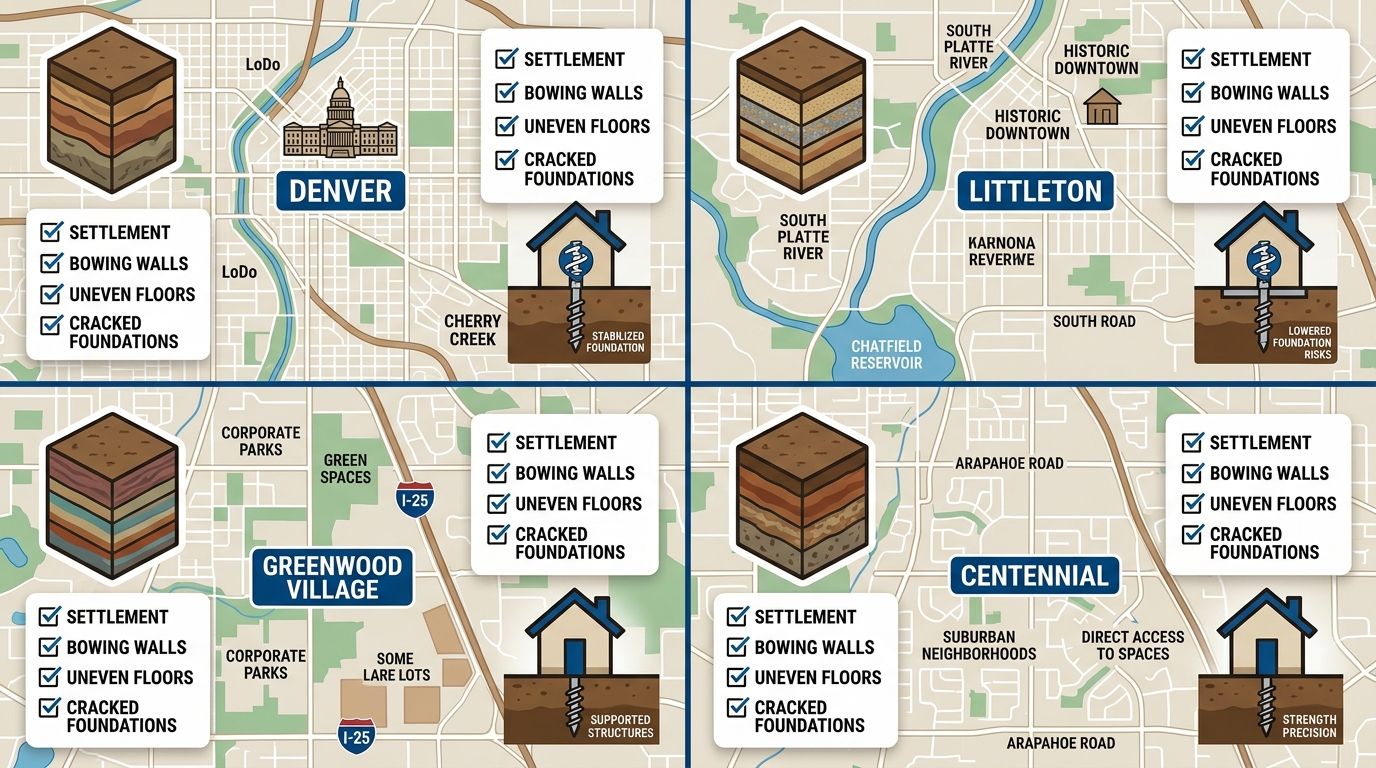
Foundation work is a critical driver of any basement adu conversion cost denver calculation, and site-specific conditions demand tailored solutions. As a family-owned and operated business since 1996, we deliver helical pier systems, tiebacks, and foam lifting that account for your area’s exact soil profile. We recommend a site inspection for precise recommendations — every ADU project deserves an engineered foundation plan suited to its local geology.
Structural Services for ADU Conversion
Beyond planning, the structural integrity of your ADU depends on proper foundation work — a major factor in understanding adu conversion cost Denver homeowners should anticipate. At Rocky Mountain Steel Piering, Inc., our structural services address the core needs of converting basements, garages, or other existing spaces into safe, compliant living areas.
In many Denver-area projects, existing foundations require reinforcement to support new living loads. We install helical piers that achieve immediate load capacity without concrete curing delays — a significant advantage in Denver’s expansive clay soils. All our helical pier installations are certified under ICC-ES AC358, ensuring third-party verified performance through rigorous, standardized load testing and real-time torque-to-capacity field verification during installation.
For a garage conversion adu cost Denver estimate, site preparation often ranks among the primary structural expenses. Similarly, a basement adu conversion cost Denver quote may include concrete removal and replacement where existing slabs are damaged, uneven, or require lowering to achieve proper ceiling heights. We assess each site’s condition and remove deteriorated concrete to prepare for new footings or improved floor levels, always tailoring the approach to your specific Denver property.
Whether you need foundation reinforcement or slab replacement, our family-owned team brings decades of Denver experience to every project. Contact us for a custom quote after an on-site evaluation — as the Experts in Steel Piers, we deliver structural solutions that help make your ADU vision a reality.
Local Building Codes and Climate Considerations
Understanding your ADU conversion cost in Denver starts with recognizing how local building codes and Front Range climate conditions directly shape foundation requirements. Denver’s 36-inch frost depth mandates that pier systems, such as helical piers, extend below that level to prevent frost heave — a non-negotiable safety standard that influences the scope and expense of your project. We work with these code-driven depths daily, engineering each installation to meet municipal requirements while keeping your timeline on track.
Expansive clay soils and heavy snow loads add another layer of structural demand, and our experience across the Denver metro confirms that helical piers and tiebacks provide reliable, code-compliant support in these conditions. For a garage conversion ADU cost in Denver, local codes often require tiebacks when retaining walls exceed a certain height during excavation, which affects both the engineering plan and the final budget. Similarly, a basement ADU conversion cost in Denver reflects the extra steps needed to stabilize below-grade walls against lateral soil pressure and moisture intrusion — issues Colorado’s freeze-thaw cycles amplify. Building permit fees and engineering review costs also contribute to your total investment, so a site-specific quote is essential for accurate budgeting.
Helical piers allow immediate loading with no cure time, a distinct advantage during Denver’s variable weather that helps reduce indirect costs compared to poured concrete. Understanding these local requirements helps you plan your foundation approach — next we compare foundation systems for Denver ADUs. Consult a licensed structural engineer or qualified professional for definitive diagnosis and design recommendations.
Getting Started with Your ADU Conversion Quote
When exploring your ADU conversion cost in Denver, the first step is getting a personalized quote that accounts for your specific site. Each project is unique, and we begin with a free on-site inspection by our trained installers to evaluate foundation requirements. This ensures any quote you receive is based on real conditions, not assumptions.
Whether you’re planning a garage conversion ADU cost in Denver or a basement ADU conversion cost in Denver, soil type and existing footings play a significant role. We examine site access, structural loads, and underlying soil stability. In areas with expansive or weak soils, we often recommend helical piers to provide predictable, immediate support. As The Experts in Steel Piers, we bring superior performance in installation of helix pier systems to every project.
Our company has been family-owned and operated since 1996 and maintains an A+ Better Business Bureau rating. All quotes are preliminary and subject to on-site verification; actual outcomes depend on field conditions. For a tailored assessment, contact us to schedule your inspection and receive a custom quote for your Denver ADU project.
Your ADU Conversion Starts with a Solid Foundation
When evaluating your ADU conversion cost in Denver, a solid foundation is non-negotiable — and that’s where we come in. As a family-owned and operated business since 1996, Rocky Mountain Steel Piering, Inc. specializes in helical pier and screw pile systems that deliver immediate load-bearing capacity with minimal site disruption. Whether it’s a garage conversion ADU cost in Denver or a basement ADU conversion cost in Denver you’re planning, a properly engineered foundation is a critical upfront investment that keeps your project on budget and prevents expensive repairs down the road. Contact us for a custom quote on foundation work for your Denver ADU.
Resources
- Discover Complete Guide for Denver Home Gym Construction
- Discover ICC-ES AC358 Helical Pier Testing Standards
- Learn How Poor Soil Compaction Causes Foundation Damage
- Avoid Costly Mistakes with DIY Foundation Crack Repair
- Discover How Egress Windows Improve Safety and Value
- Get Expert Insights on Barndominium Builder Costs in Grand Junction
- Get Expert Advice on Hiring General Contractors in Colorado