
Foundation Stabilization for Historical Renovations: Complete Guide
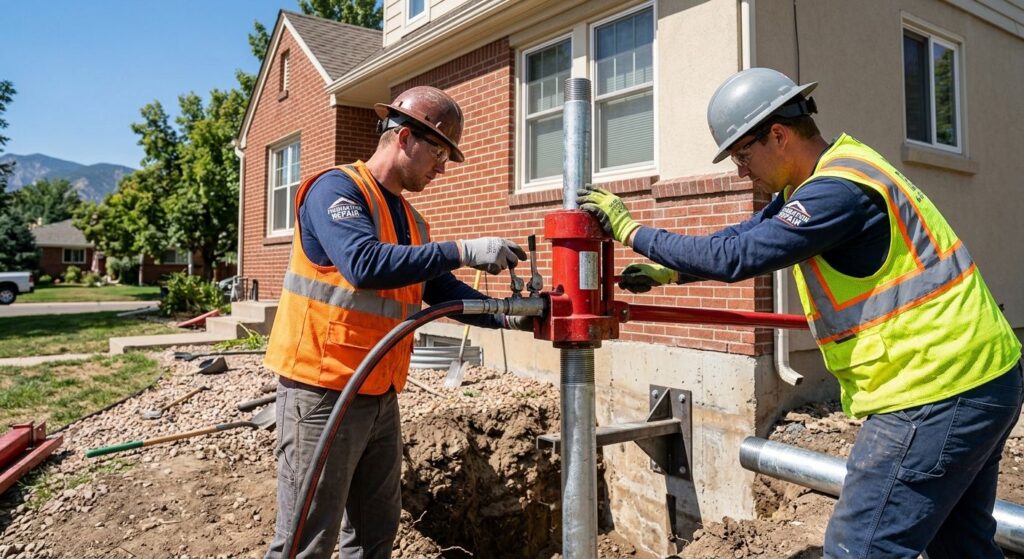
Table of Contents
- The Steel Piering Installation Process in Littleton, CO
- Key Benefits of Choosing Steel Piering
- Steel Piering vs. Alternatives: Which Foundation Repair Method Is Right for You?
- What Does Steel Piering Cost in Littleton, CO?
- Conclusion: Make the Right Choice for Your Foundation
- Frequently Asked Questions About Steel Piering
Introduction – Why Your Littleton Home Needs Steel Piering
Littleton homeowners enjoy the beauty of the Front Range, but the soils beneath many homes pose a hidden threat. Expansive clay soils common across the Denver metro area shrink and swell with seasonal moisture changes, creating uneven movement that can compromise a foundation over time.
The Hidden Danger Under Your Littleton Home
Subtle signs like stair-step cracks in brickwork, doors that stick or won’t latch, and sloping floors are often early warnings of foundation settlement. When the underlying soil loses its bearing capacity, the weight of your home pushes downward, and the damage compounds quickly. In communities from Littleton to Centennial, Colorado’s geology demands a repair approach that reaches past the unstable surface layer to stable, deep-bearing strata.
Why Steel Piering Stands Above the Rest
Steel piering is the premier solution for lasting foundation stabilization in Colorado’s challenging soils. Unlike cosmetic patches that address only symptoms, helical piers are driven deep into competent soil or bedrock, transferring the weight of your home far below the active zone of expansion and contraction. As a family-owned and operated business since 1996, Rocky Mountain Steel Piering has built its reputation as The Experts in Steel Piers across Littleton, Greenwood Village, and the entire Denver region.
We install hot-dip galvanized helical piers fabricated to ASTM standards, ensuring corrosion protection and reliable bearing performance for decades. Our trained, certified crews use rotary installation techniques that minimize site disruption and allow immediate load transfer — no cure time required. Whether for a historic bungalow, a custom new build, or a municipal boardwalk, steel piering provides the predictable support that Colorado foundations demand.
The Steel Piering Installation Process in Littleton, CO
At Rocky Mountain Steel Piering, Inc., The Experts in Steel Piers and family-owned and operated since 1996, we believe informed homeowners make better decisions. For those seeking foundation repair Colorado, understanding the steel pier installation process is the first step toward confidence in your foundation’s future. While the steps below describe a typical installation, every project is customized based on your home’s specific conditions. Our proven method delivers lasting stability in the expansive clay soils found throughout Littleton. Here’s a step-by-step look at what to expect.
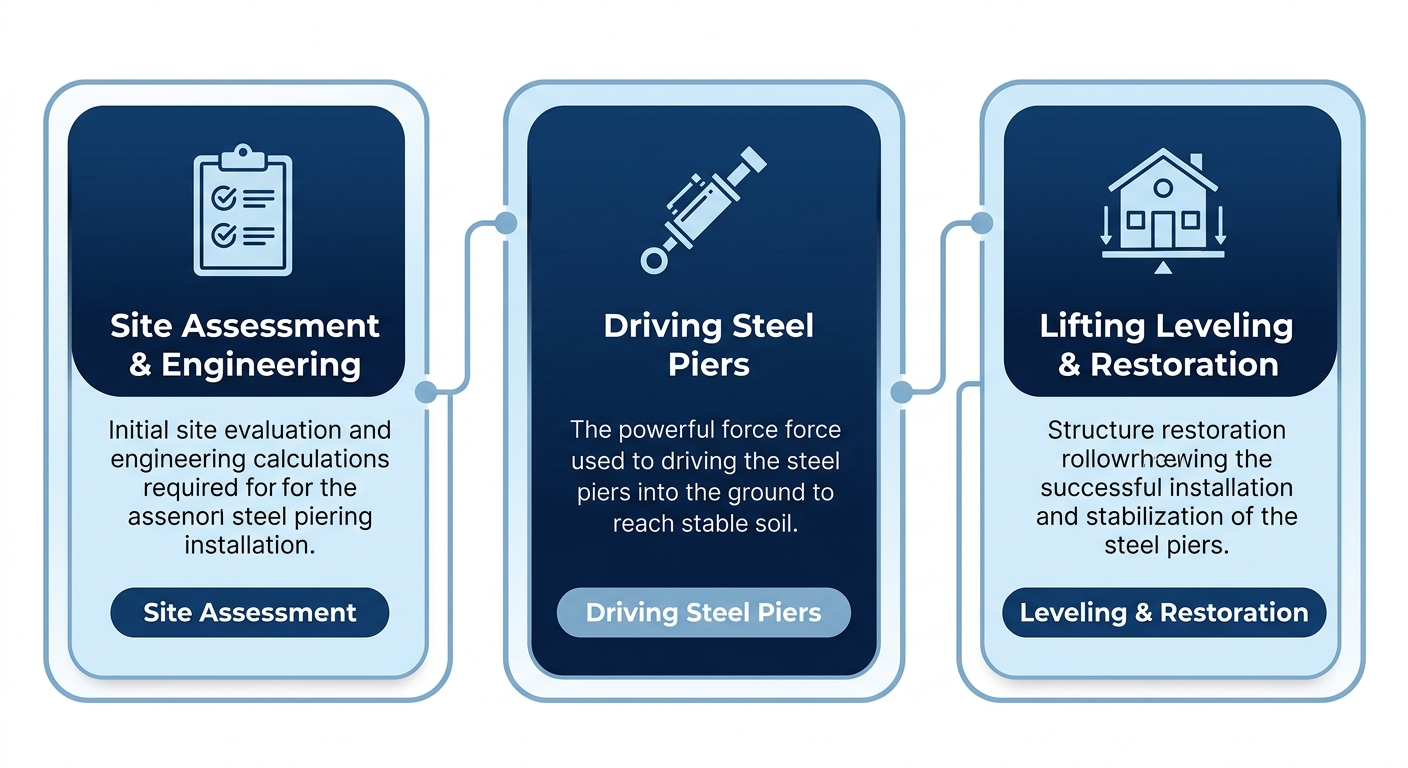
Visual timeline of the steel pier installation process in Littleton, CO
Step 1: Professional Site Assessment & Engineering
Projects that require foundation stabilization for historical renovations or any heavy structural work begin with a comprehensive site assessment. In Littleton, where expansive clay soils are prevalent, understanding the ground’s behavior is critical. Our licensed engineer conducts a geotechnical evaluation to determine soil type, bearing capacity, and moisture content. During the site visit, we measure slab elevations and identify visible signs of settlement. Load calculations are then performed based on the structure’s dimensions and anticipated forces.
The resulting stamped engineering plans for foundation underpinning specify pier locations, embedment depths, and load requirements. These documents serve as the permit-ready roadmap for the entire project, ensuring that each pier will reach competent soil and provide the necessary support. We review the engineered plans with you before any excavation begins, so you know exactly what to expect. The assessment phase typically takes a few days and includes bearing-capacity values that target the strongest soil stratum, often found 8–12 feet below grade in Littleton.
Step 2: Driving Steel Piers to Stable Soil
Once the engineering plans and permits are in hand, our crew mobilizes to the site. Small access pits—approximately 2 feet by 2 feet—are excavated at each foundation corner to expose the footing. This localized excavation keeps landscape disturbance to a minimum.
We position a heavy-duty hydraulic drive stand and ram at each pit. Galvanized steel pipe sections, each 3 to 4 feet long, are driven into the soil one after another. Each section is connected with a threaded coupling to form a continuous pier. The driving process applies steady downward pressure and monitors torque; the technique, while distinct from helical pier installation, achieves the same goal—reaching stable bearing strata.
In Colorado’s clay and weathered bedrock, refusal typically occurs between 8 and 12 feet. At that depth the pier can no longer advance, indicating that it has reached soil with adequate bearing capacity. Torque readings confirm that the required capacity—often exceeding 10,000 pounds per pier—has been attained.
Our hydraulic drive system includes:
- Heavy-duty hydraulic ram
- Galvanized steel pier sections
- Threaded couplings
- Torque monitoring equipment
- Laser level for depth measurement
We drive piers in a predetermined sequence to avoid uneven loading. Once refusal is reached, the pier is capped and a jacking head is attached. Because steel piers are immediate-load-capable, the foundation can be supported the moment the piers are in place, with no curing time required. The driving phase for a typical single-family home can be completed in one to two days, depending on the number of piers needed.
Step 3: Lifting, Leveling & Final Restoration
With all steel piers driven to stable soil, lifting begins. Synchronized hydraulic jacks are placed on each pier and linked to a central control system. This allows us to raise the foundation uniformly, using laser levels to monitor elevation changes in real time. The lift is gradual—often fractions of an inch per hour—to prevent stress to the framing.
Once the foundation is returned to its original level, we fill any voids beneath the footing with non-shrink grout, locking the structure in place. The access pits are then backfilled with compacted soil and graded to match the surrounding landscape. We reseed or replant grass to restore your yard. With minimal landscaping disruption, the system is immediately load-capable, and families can resume normal activities the same day.
Key Benefits of Choosing Steel Piering
For historical renovations requiring foundation stabilization in Littleton and the Denver metro, steel piering provides a permanent, low-impact solution. Homeowners trust steel piering Littleton—family-owned and operated since 1996—to deliver lasting results. Now let’s explore the key benefits that make this method the preferred choice for foundation repair.
Permanent Solution: No Recurrence of Settlement
Steel piering provides a permanent repair by transferring the weight of a structure directly to competent load-bearing strata. Unlike concrete underpinning methods that require days of curing, our steel piers are driven to bedrock or dense soil and can be loaded immediately, without vibration that could disturb historic finishes. For historical renovations, this immediate load transfer means the building can remain occupied without long vacancies. Our certified crews install each pier using small, isolated pits (typically 2×2 feet), preserving the integrity of the property. This approach outperforms helical pier installation methods that often require larger excavations or are less reliable in poor soils. While steel piering effectively halts settlement in most cases, consulting a licensed structural engineer ensures the right solution for your home.
High Load Capacity & Durability
Galvanized steel piers deliver exceptional durability and load-bearing capacity. Unlike traditional foundation underpinning methods that rely on concrete prone to cracking over time, these load-bearing piles resist corrosion and decay. We galvanize all pier components to ASTM standards, unaffected by Colorado’s expansive soils and seasonal moisture changes. They can support compressive loads far exceeding typical residential requirements, making them ideal for historic masonry structures that demand unwavering support. As The Experts in Steel Piers, we ensure every installation meets the highest standards, with a lifespan measured in decades that provides peace of mind for Littleton homeowners.
Minimal Excavation & Landscape Preservation
Steel piering requires only small, isolated pits—typically 2 feet by 2 feet—dug by hand or light equipment. Unlike large excavations needed for concrete underpinning, this minimal-dig solution protects existing patios, walkways, and mature landscaping. For historic renovations, this precision preserves original stonework and delicate finishes. The installation process is quiet and vibration-free; after compaction, our crews restore each pit with new concrete and soil, leaving your property intact. These benefits make steel piering the preferred choice for preserving your home’s structure.
Steel Piering vs. Alternatives: Which Foundation Repair Method Is Right for You?
Comparing Foundation Repair Methods
Understanding how each system performs is essential before making a decision. Foundation underpinning with steel piers is widely specified for existing homes suffering from settlement, while helical pier installation is often selected for new construction or light structural loads. Concrete piers offer a traditional approach, but their performance depends heavily on stable, non-expansive soil conditions. The table below lays out the key distinctions side by side.
| Factor | Steel Piering | Concrete Piering | Helical Piers |
|---|---|---|---|
| Installation Time | 2-3 days | 7-10 days | 1-2 days |
| Load Capacity (per pier) | Up to 100,000 lbs | Up to 80,000 lbs | Up to 200,000 lbs |
| Soil Suitability | All soil types, best for expansive clay | Best for stable, non-expansive soil | All soil types, but may need deeper installation in clay |
| Longevity | 50+ years (galvanized) | 30-50 years (if not affected by sulfate) | 50+ years (hot-dip galvanized) |
| Cost per Pier (installed) | $1,000–$1,500 | $800–$1,200 | $1,200–$2,000 |
| Best For | Existing homes with settlement issues | Light structures on stable soils | New construction or light foundation repair |
Why Steel Piering Wins for Littleton Homes
For Littleton homes built on expansive clay, steel piering often provides the best balance of durability, cost, and suitability. The clay soils common across our region expand when wet and shrink during dry spells, cycles that can lift and drop a foundation repeatedly. Steel piers can be driven to bedrock or a stable load-bearing stratum, bypassing the active soil layer and effectively eliminating future movement caused by swelling ground.
What Does Steel Piering Cost in Littleton, CO?
When homeowners in Littleton, CO, first research foundation repair costs, they quickly discover that no reputable contractor can publish a fixed price list. Steel piering requires a custom quote because each property presents unique soil and structural variables. Below are the factors we evaluate during an on-site inspection to prepare your personalized quote.
Factors That Affect the Total Cost
Soil conditions: the depth to stable load-bearing strata and soil type directly affect the number of helical piers needed and how deep they must be driven. For helical pier installation, the pier must extend past the active zone of shrink-swell soils common in the Front Range. The number of piers required depends on the linear footage of affected foundation walls and the number of corners needing support. Accessibility—whether the work area is in a crawl space, surrounded by landscaping, or close to neighboring structures—influences equipment and labor complexity. Additional structural repairs like tiebacks or concrete replacement further shape the total investment. These variables are exactly why we evaluate each property on-site. That’s why The Experts in Steel Piers conduct a thorough inspection before providing any pricing.
Average Steel Piering Cost for Littleton Homes
You may see average per-pier figures online, but applying those to your Littleton home can be misleading. Foundation underpinning is inherently site-specific; even two homes with similar square footage can require significantly different pier counts and embedment depths because their soil bearing capacities differ. Foundation stabilization for historical renovations adds further complexity, as preserving original materials and meeting preservation guidelines can influence the scope and methods used.
Because cost factors for helical pier systems can vary greatly from one property to another, our custom-quote process—backed by a family-owned and operated team since 1996—eliminates guesswork. We send a certified installer to assess your foundation in person, which allows us to produce a written quote that reflects real-world conditions, not a generic average. To get a realistic estimate of steel piering cost Littleton, we recommend visiting our cost guide and scheduling a free evaluation.
Conclusion: Make the Right Choice for Your Foundation
Your Home Deserves a Permanent Fix
Foundation issues in Littleton often stem from expansive soils that shift with moisture changes. A lasting solution must target the root cause. Steel piering systems transfer structural loads past unstable soil to deep, load-bearing strata, preventing future settlement. When you choose a proven approach like steel piering Littleton, you invest in a stable home for decades. With over 25 years of experience, we’ve seen how properly installed piers eliminate recurring cracks and uneven floors.
Take the First Step Today
After your foundation inspection, we recommend the following steps for a thorough, lasting repair:
- Complete a professional foundation assessment. A structural engineer or qualified specialist evaluates the extent of damage, soil conditions, and structural load requirements.
- If significant settlement is found, your contractor may recommend foundation underpinning to reinforce and stabilize the footing.
- When helical piers are chosen, helical pier installation proceeds according to engineering standards such as those in the International Residential Code (IRC) Section R403.1.
- Monitor the repaired area for movement. After the work is complete, periodic checks confirm that the foundation remains stable.
As recognized in ASTM D3689, specific foundation repair solutions vary by soil type and should be recommended by a structural engineer. Always consult local building codes and manufacturer specifications.
Frequently Asked Questions About Steel Piering
How Long Does Steel Piering Take?
A standard residential helical pier installation typically takes 2 to 3 days, though the exact timeline depends on site conditions such as soil makeup and equipment accessibility. Our certified installers use rotary installation techniques that allow for faster installation rates in poor soils, and the system’s immediate loading capability keeps the project moving efficiently.
Is Steel Piering Permanent?
When installed correctly to reach stable load-bearing strata, steel piers provide a permanent support solution that prevents further settlement. The engineered design offers predictable capacities on installation, giving confidence in long-term performance. We always recommend that property owners consult a licensed structural engineer for definitive recommendations.
Does Steel Piering Work in All Soil Types?
Yes, steel pier systems are effective across clay, sandy, loam, and rocky soils because they are driven deep until they reach stable strata, bypassing the weaker surface layers. This approach makes foundation underpinning with helical piers effective even in challenging conditions where other methods struggle.
What Warranty Is Offered?
Many steel pier systems, including those we install, come with a lifetime transferable warranty that adds value and peace of mind for property owners. The Experts in Steel Piers back their work with coverage that reflects the reliability of the engineered solution. For complete warranty details, we encourage you to contact Rocky Mountain Steel Piering directly.