
Polyurethane Foam vs Steel Piers Foundation Repair: Which to Choose
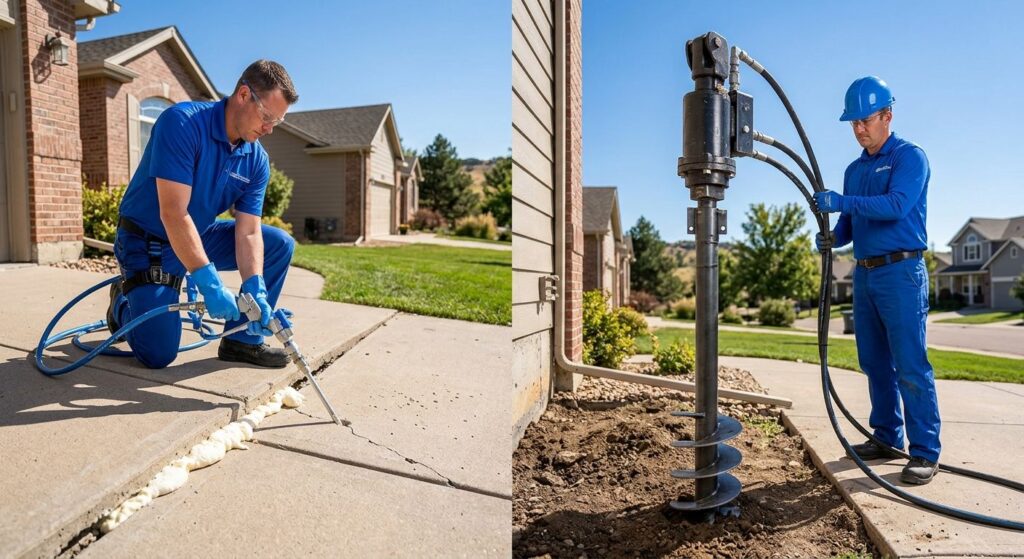
Table of Contents
- Polyurethane Foam vs Steel Piers for Foundation Repair in Littleton, Colorado
- The Rocky Mountain Steel Piering Advantage for Foundation Repair
- Foundation Repair Methods Compared: Polyurethane Foam vs Steel Piers
- Cost Factors in Foundation Repair: Steel Piers vs Polyurethane Foam
- Choosing Between Steel Piers and Polyurethane Foam for Your Foundation
- Taking the Next Step in Foundation Repair
Polyurethane Foam vs Steel Piers for Foundation Repair in Littleton, Colorado
When comparing polyurethane foam vs steel piers foundation repair in Littleton, Colorado, the choice hinges on load demands, soil conditions, and insurance requirements. Now that you understand the causes of settlement, let’s compare these two popular repair options.
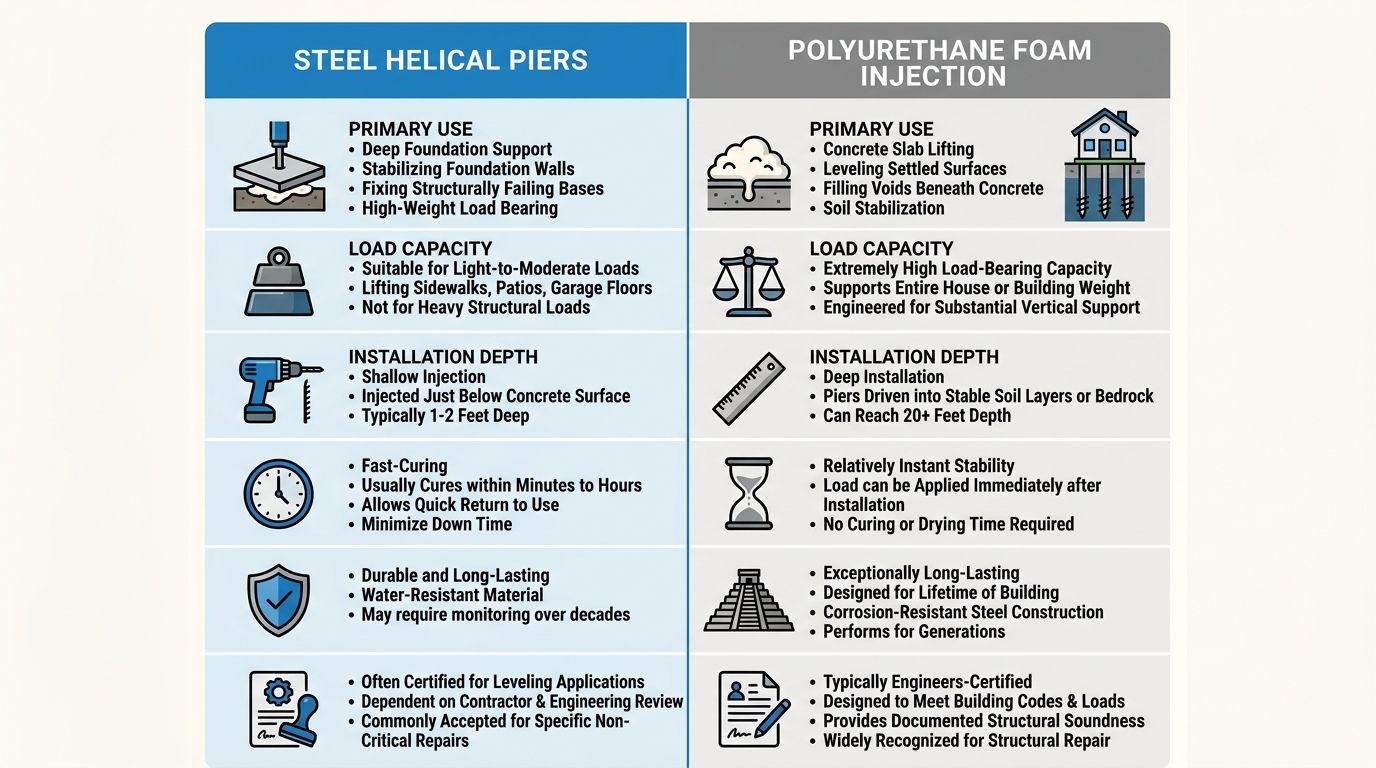
We have summarized the key differences in the comparison table below.
| Feature | Polyurethane Foam Injection | Steel Helical Piers |
|---|---|---|
| Primary Use | Lifting and leveling settled concrete slabs, sidewalks, and driveways | Deep foundation support for structural settlement and heavy-load applications |
| Load Capacity | Low to moderate; best for surface-level lifting (∼20–30 kips per injection point) | High; engineered helical piers transfer loads to competent soil or bedrock (up to 200+ kips per pier) |
| Installation Depth | Shallow – typically 2–4 feet below the surface | Deep – driven or screwed to load-bearing strata (20–60+ feet) |
| Cure / Set Time | Fast – foam expands and hardens within minutes | Immediate – piers carry structural load immediately upon installation (no cure time) |
| Longevity & Corrosion Protection | Limited – foam degrades under UV exposure and can become brittle over decades; no standard corrosion protection | Designed for decades; hot-dip galvanization per ASTM A123 provides robust corrosion resistance in Colorado soils |
| Structural Certification | Typically applied without engineered design; limited to cosmetic/leveling applications | Engineered to meet building codes and soil reports; each pier installation includes calculated load capacities |
Unlike slab jacking, which only addresses concrete lifting, foundation underpinning with steel piers increases deep load bearing capacity and transfers weight to stable layers. Polyurethane foam, by contrast, fills voids and compacts surface soils without reaching deep load-bearing strata.
Our internal FAQ explains that coverage depends on damage cause and repair method; homeowners should verify how their sinkhole insurance coverage applies to each option. Steel pier systems are frequently approved by insurers for structural restoration, while foam injection may face more scrutiny.
As a family-owned and operated business since 1996, we are The Experts in Steel Piers. Contact Rocky Mountain Steel Piering for a custom quote after an on-site inspection.
The Rocky Mountain Steel Piering Advantage for Foundation Repair
When considering any foundation repair, the debate between polyurethane foam vs steel piers foundation repair often comes down to long-term stability. At Rocky Mountain Steel Piering, The Experts in Steel Piers, we provide steel pier solutions that deliver immediate load-bearing support. Founded in 1996, our family-owned company has over three decades of experience stabilizing foundations across Colorado.
Unlike foam or poured concrete, helical piers require no cure time—they can be loaded immediately, which means project delays are virtually eliminated. Installations proceed up to 66% faster in poor soils, minimizing site disruption—a stark contrast in the polyurethane foam vs steel piers foundation repair landscape. Every pier is placed by trained, certified installers who verify predictable capacities, with the load bearing capacity of helical piers backed by engineering data.
We back our work with an A+ BBB accreditation and hold ourselves to the same high standards we recommend in our contractor vetting FAQ—proper licensing, insurance, and specialized training. Our diagnostic approach, as explained in our hydrostatic pressure testing FAQ, ensures a comprehensive evaluation of water intrusion before lifting begins. It’s also important to understand the distinction in slab jacking vs foundation underpinning: steel piering is true underpinning that anchors to load-bearing strata, not a temporary slab lift.
This commitment to quality is why leading general contractors in Colorado trust us for foundation repair projects—and we look forward to bringing our expertise to your next project.
Foundation Repair Methods Compared: Polyurethane Foam vs Steel Piers
For homeowners in Littleton along the Front Range, choosing the right foundation repair method often comes down to understanding the polyurethane foam vs steel piers foundation repair distinction. As a family-owned and operated company since 1996, Rocky Mountain Steel Piering, Inc. offers both solutions, but we are The Experts in Steel Piers for deep, structural support.
The following table summarizes the key performance differences:
| Metric | Polyurethane Lifting | Steel Helical Piering |
|---|---|---|
| Structural Stability | Moderate; depends on soil density | Extreme; bypasses active soil layers |
| Soil Movement Resistance | Low; susceptible to frost heave | High; anchors in stable strata |
Side-by-Side Performance Comparison
When evaluating polyurethane foam vs steel piers foundation repair, the slab jacking vs foundation underpinning comparison centers on the load bearing capacity of helical piers versus the lighter lifting foam. Steel helical piers are designed and installed in accordance with structural foundation engineering standards, ensuring reliable load transfer to competent soil or bedrock. Our helical piers deliver superior performance in installation of helix pier systems with predictable capacities and immediate loading. For example, each pier can support over 200 kips, far exceeding the 20-30 kips typical of polyurethane foam lifts, making steel the preferred choice for serious structural settlement. Conversely, polyurethane foam injection is a fast, minimally invasive option for restoring dislodged slabs without structural underpinning.
Foundation repair methods: polyurethane foam vs steel piers
How to Match the Method to Your Foundation Problem
Minor slab settlement in Littleton often responds to polyurethane foam lifting. For diagonal cracks, bowing walls, or major settlement, steel helical piers are required. Expansive clay soils along the Front Range demand deep, load-bearing underpinning. Consult a licensed structural engineer for a definitive diagnosis. Contact us for a custom, on-site inspection.
Cost Factors in Foundation Repair: Steel Piers vs Polyurethane Foam
Understanding the mechanics behind foundation repair methods naturally leads to the question of cost. For homeowners evaluating polyurethane foam vs steel piers foundation repair in Colorado, initial price tags only tell part of the story. Site accessibility, material quality, and long-term value shape the true investment.
Steel pier systems use galvanized steel components and require hydraulic installation equipment and deep excavation, factors that raise upfront costs. The load bearing capacity of helical piers can exceed 100 tons per pier, adding material expense. Furthermore, adherence to ASTM foundation engineering standards mandates rigorous material and installation quality, influencing overall cost. In contrast, polyurethane foam lifting demands less invasive equipment and fewer labor hours, often resulting in lower immediate costs. However, foam injection—categorized as slab jacking vs foundation underpinning—depends on void volume and foam density, and may need reapplication if soil shifts. While polyurethane foam vs steel piers foundation repair in Colorado shows foam’s lower upfront expense, steel piers deliver lasting structural stability.
Every foundation is unique, so we base pricing on an on-site inspection. As a family-owned and operated company since 1996 and The Experts in Steel Piers, contact us for a custom quote.
Choosing Between Steel Piers and Polyurethane Foam for Your Foundation
When it comes to polyurethane foam vs steel piers foundation repair, the decision hinges on your project’s structural demands, soil type, and load requirements. As a family-owned Littleton company with three decades of experience, we install both systems and know that a proper match requires a thorough on-site assessment.
For heavy structures and load-bearing walls, the load bearing capacity of helical piers offers reliable underpinning. As detailed in our FAQ, these steel piers extend past unstable soil to firm bearing layers, deliver immediate load capacity with no cure time, and are load-tested during installation. In Colorado’s expansive clay soils, steel piers often outperform alternative approaches. Our crews follow concrete repair technical standards published by ICRI, ensuring proper concrete preparation and restoration when needed.
Polyurethane foam excels in slab jacking vs foundation underpinning scenarios—it raises settled concrete slabs and fills voids. The foam works best in stable, low-moisture soils; Colorado’s dynamic clay soil and freeze-thaw cycles can challenge its long-term performance. Foam sets quickly but lacks the structural capacity required for heavy load-bearing applications.
Choosing between steel piers and polyurethane foam ultimately requires a professional on-site evaluation and engineered design. Following NSPE ethical guidelines, we recommend consulting a licensed engineer. Contact us for a custom quote; actual outcomes depend on site conditions and a licensed engineer’s design. Understanding how each method is installed further clarifies which system suits your foundation best.
Taking the Next Step in Foundation Repair
The decision between polyurethane foam vs steel piers foundation repair comes down to site conditions. Our experts will determine the right solution through a thorough on-site inspection.
We assess whether slab jacking vs foundation underpinning is right for your situation and verify the load bearing capacity of helical piers on site. After repair, protect your investment with basement waterproofing in Colorado Springs. Our waterproofing systems, from vapor barriers to interior perimeter drains, provide lasting moisture control. Note that load-bearing capacities depend on soil conditions verified during inspection.
As a family-owned and operated business since 1996 with an A+ BBB rating, we are committed to quality. Contact our team today to schedule your free estimate and on-site inspection. Let us help you protect your home.