
Signs of Foundation Settlement in Colorado: Homeowner’s Guide
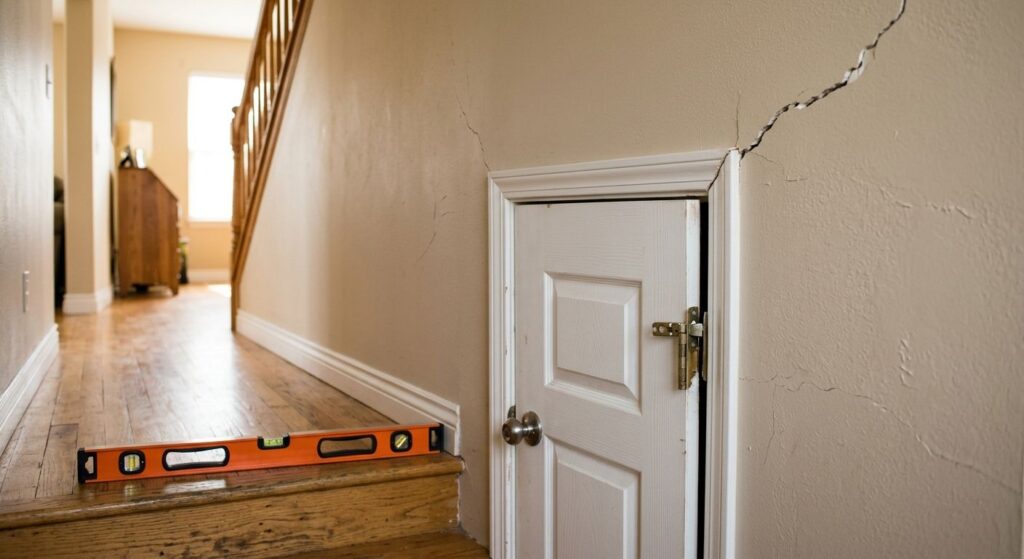
Table of Contents
- Recognizing Foundation Settlement Signs in Colorado Homes
- Geological and Soil Conditions Across the Front Range
- Foundation Repair Services Available for Colorado Homeowners
- Colorado’s Expansive Clay Soil and Its Impact on Foundations
- Steps to Take When You Notice Signs of Foundation Settlement
- Protecting Your Home’s Foundation for the Long Term
Recognizing Foundation Settlement Signs in Colorado Homes
Recognizing the early signs of foundation settlement in Colorado homes is crucial because expansive clay soils cause differential movement. Underlying these indicators is expansive clay soil foundation damage, which continually stresses building frames. Sticking doors and windows often result from frames shifting out of square, while uneven floors may signal slab settlement—a condition that is especially common in Colorado’s clay-rich terrain. Diagonal drywall cracks that radiate from door or window corners at typical 45-degree angles are another classic sign of differential settlement. Additionally, stair-step cracks in brick mortar on exterior walls provide a visible external clue. If you observe any of these symptoms, we recommend a professional inspection to determine whether foundation stabilization is needed to protect your home’s structural integrity.
Geological and Soil Conditions Across the Front Range
Across the Front Range, diverse geological conditions create unique foundation challenges. In Littleton, Denver Claystone with moderate to high clay content can cause differential settlement. In Denver, expansive clay (bentonite) leads to significant soil heave and stair-step cracks. Centennial’s clay loam soils exhibit high plasticity, contributing to vertical and diagonal wall cracks, while Greenwood Village’s mixed clay and gravel often results in uneven floors and sticking doors. Understanding these soil variations is essential for identifying signs of foundation settlement in Colorado.
The table below summarizes the soil conditions and typical foundation issues we encounter across our primary Front Range service areas.
| Location | Dominant Soil Type | Common Foundation Problems | Recommended Solutions |
|---|---|---|---|
| Littleton | Denver Claystone – moderate to high clay content | Differential settlement, wall cracks | Helical piers, tiebacks |
| Denver | Expansive clay (bentonite) – high shrink‑swell potential | Soil heave, stair‑step cracks in brick mortar | Polyurethane foam lifting, crack repair (epoxy injection) |
| Centennial | Clay loam with high plasticity | Vertical and diagonal cracks, uneven floors | Epoxy injection, screw piles |
| Greenwood Village | Mixed clay and gravel | Uneven floors, sticking doors / windows | Helical piers, perimeter drain systems |
In Littleton, Denver Claystone with moderate to high clay content often leads to differential settlement. In Denver, expansive clay soil foundation damage is driven by bentonite’s high shrink-swell potential. Stair-step cracks in brick mortar are a common sign, and our FAQ explains that stair-step cracks in brick frequently indicate foundation settlement. Uneven floors also signal movement, as detailed in our slab settlement resources. We typically recommend helical piers in these areas, while polyurethane foam lifting often addresses Denver’s heave issues. For many Front Range homes, these solutions provide effective stabilization.
For accurate diagnosis, consult a licensed structural engineer. Recognizing how soil type influences foundation behavior helps us select the right repair approach, which we’ll cover next.
Foundation Repair Services Available for Colorado Homeowners
To address these settlement issues, RMSS offers a full range of foundation repair services tailored for Colorado homes. Recognizing the early signs of foundation settlement in Colorado — including sticking doors, drywall cracks, and separations in brick mortar — is the first step toward protecting your property’s structural integrity and value.
Our company, The Experts in Steel Piers, specializes in engineered helical pier installation for deep foundation support in expansive clay soils, where moisture cycles cause expansive clay soil foundation damage. We also provide concrete removal and replacement, crack chasing and sealing, and epoxy injection for stair-step cracks in brick mortar and concrete. To manage water intrusion and improve below-grade living spaces, we install perimeter drain systems and egress windows — a solution that enhances basement ventilation and safety. Homeowners researching egress window installation cost in Colorado can rely on RMSS’s professional installation to improve basement ventilation and safety.
Additional services include polyurethane foam slab lifting, tiebacks, and screw piles, all backed by our trained installers who deliver reliable, site-specific solutions. Family-owned and operated since 1996 with an A+ BBB accreditation, we serve homeowners in Littleton, Denver, Centennial, Douglas County, and throughout Colorado.
Ready to start your construction project? Contact RMSS for a professional assessment of your foundation concerns. All information is for general informational purposes and may be updated without notice.
Colorado’s Expansive Clay Soil and Its Impact on Foundations
Understanding the early signs of foundation settlement in Colorado is vital for homeowners across the Denver metro area, including Littleton, Centennial, and Greenwood Village. Expansive clay soil foundation damage is a pervasive problem because the clay-rich earth beneath much of the region undergoes dramatic volume changes—swelling when wet and shrinking during dry spells—exerting powerful forces on building foundations.
When this expansive soil moves, differential settlement often causes uneven structural shifting, producing stair-step cracks in brick mortar. These diagonal fractures that follow the mortar joints indicate that the foundation is responding to changing support below the footing. While expansive clay is a dominant cause, other issues like poor compaction or drainage problems can also contribute to settlement, making a thorough evaluation essential.
To quantify soil behavior, foundation engineers reference ASTM technical standards such as ASTM D4318, which classifies clay plasticity through Atterberg limits. The American Society of Civil Engineers (ASCE) also publishes design guidelines that account for expansive soil conditions, ensuring new structures are built with adequate resilience against ground movement.
At Rocky Mountain Steel Piering, Inc., our family-owned team, serving Colorado since 1996, has extensive experience diagnosing and solving these soil-related foundation challenges. Understanding the role of expansive clay is the first step; the next section will explore how our helical pier systems provide durable solutions.
Steps to Take When You Notice Signs of Foundation Settlement
When you notice signs of foundation settlement in Colorado, such as stair-step cracks in brick mortar or uneven floors, it is important to take methodical action. These indicators are frequently linked to expansive clay soil foundation damage, which is prevalent across our region.
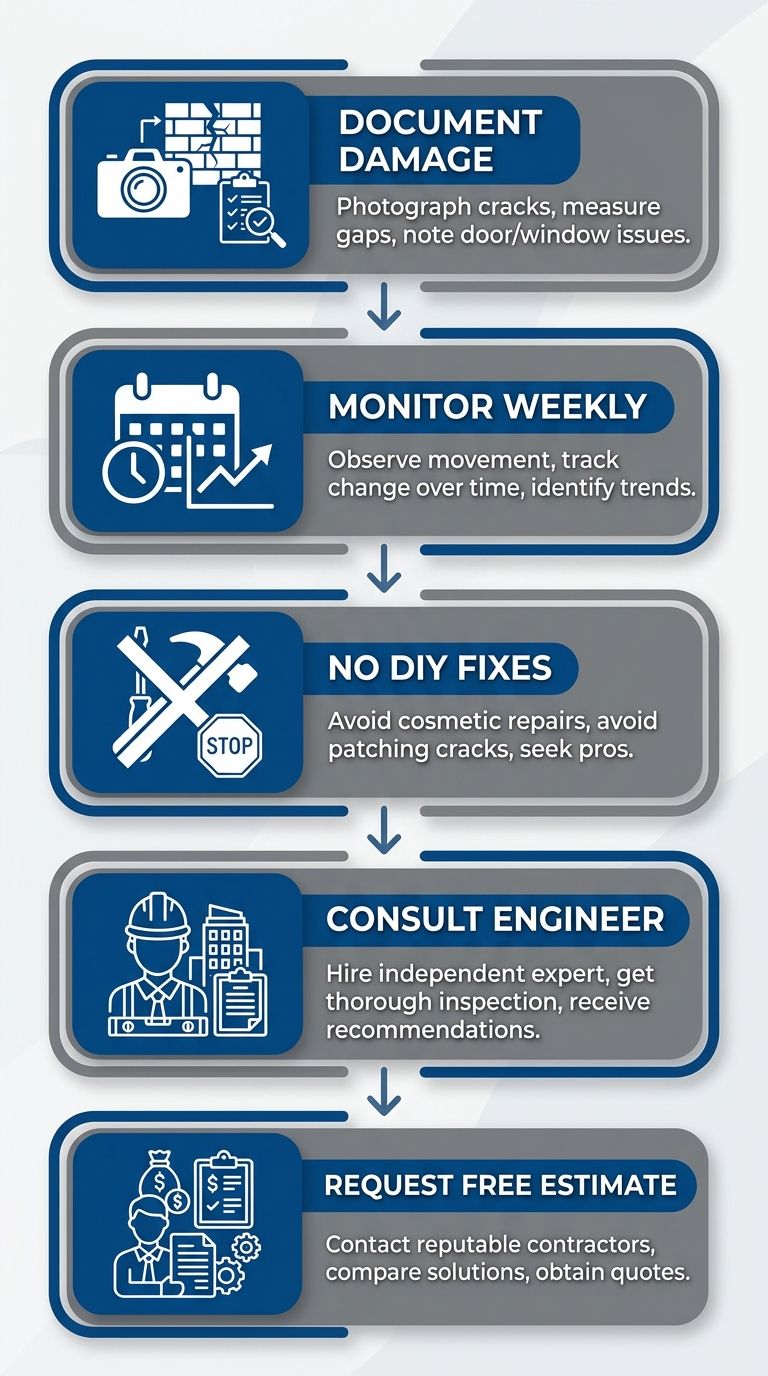
5-step process flow for addressing foundation settlement signs.
First, document the cracking or floor slope with photographs and precise measurements, noting any changes over a week or two. Avoid sealing the cracks yourself; such cosmetic fixes can mask the progression of the damage. We recommend consulting a licensed structural engineer or qualified professional to obtain a definitive diagnosis and design recommendations before you contact any contractor. As a family-owned and operated company since 1996, we offer free estimates and on-site inspections for foundation repair throughout the Denver metro area, including Littleton and Douglas County. For those who want to understand the engineering principles behind stabilization, civil engineering professional development resources, such as those from ASCE, can provide deeper insight. Once professional consultation clarifies the root cause, you can explore targeted repair solutions.
Protecting Your Home’s Foundation for the Long Term
Once you recognize the early signs of foundation settlement in Colorado, such as stair-step cracks in brick mortar, proactive action becomes critical. We know expansive clay soil foundation damage drives settlement, so professional evaluation is essential. As The Experts in Steel Piers, family-owned and operated since 1996, we recommend helical pier systems to transfer loads to stable soil, minimizing disruption. Consult a licensed structural engineer or qualified professional for definitive diagnosis and design recommendations.