
Polyurethane Foam Lifting vs Concrete Replacement: Pros and Cons
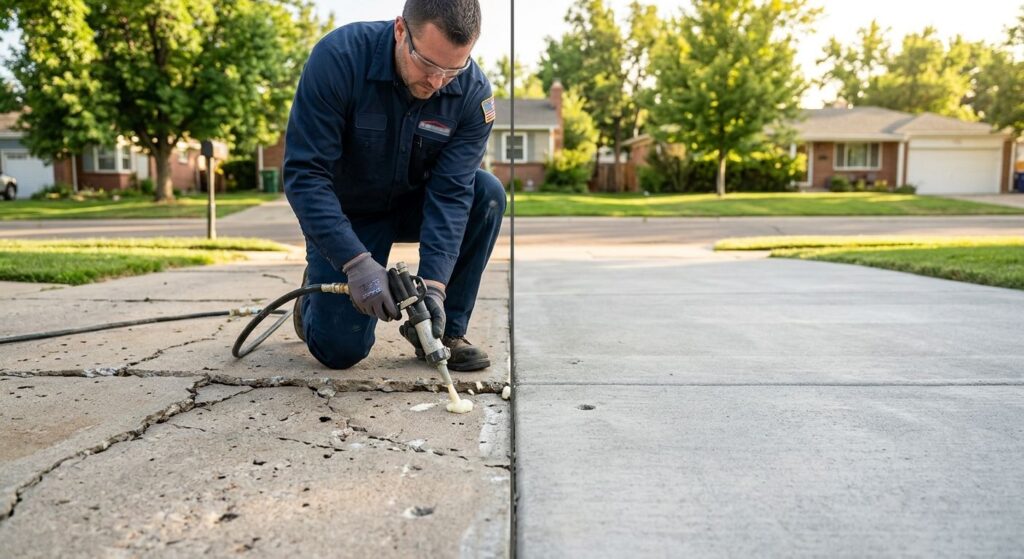
Table of Contents
Polyurethane Foam Lifting vs Concrete Replacement: A Guide for Denver Homeowners
As a family-owned and operated company since 1996, we help Denver homeowners weighing polyurethane foam lifting vs concrete replacement understand their options. This guide outlines what each method involves: polyurethane foam lifting injects expanding foam beneath a settled slab to raise and stabilize it, while full concrete replacement removes and repours the existing slab. Both are services we offer, and the right choice depends on your slab’s condition and project goals.
When comparing polyurethane foam lifting vs concrete replacement, time and site disruption differ considerably. Foam lifting generally takes less time and disturbs the surrounding area less than removing and repouring. However, the durability and suitability of each method vary. While the cost of polyurethane foam concrete leveling is a common question, every project receives a custom quote after an on-site inspection. We always recommend consulting a licensed structural engineer for a definitive diagnosis and design recommendation.
Let’s take a closer look at how each approach works, starting with polyurethane foam lifting.
1. Cost Savings Over Concrete Replacement
Beyond its structural benefits, polyurethane foam lifting saves homeowners money compared to full concrete replacement. When considering polyurethane foam lifting vs concrete replacement, our injection method in Littleton and Douglas County avoids demolition, haul-away, and repouring — often making it the more economical choice.
The primary cost-saving advantages include:
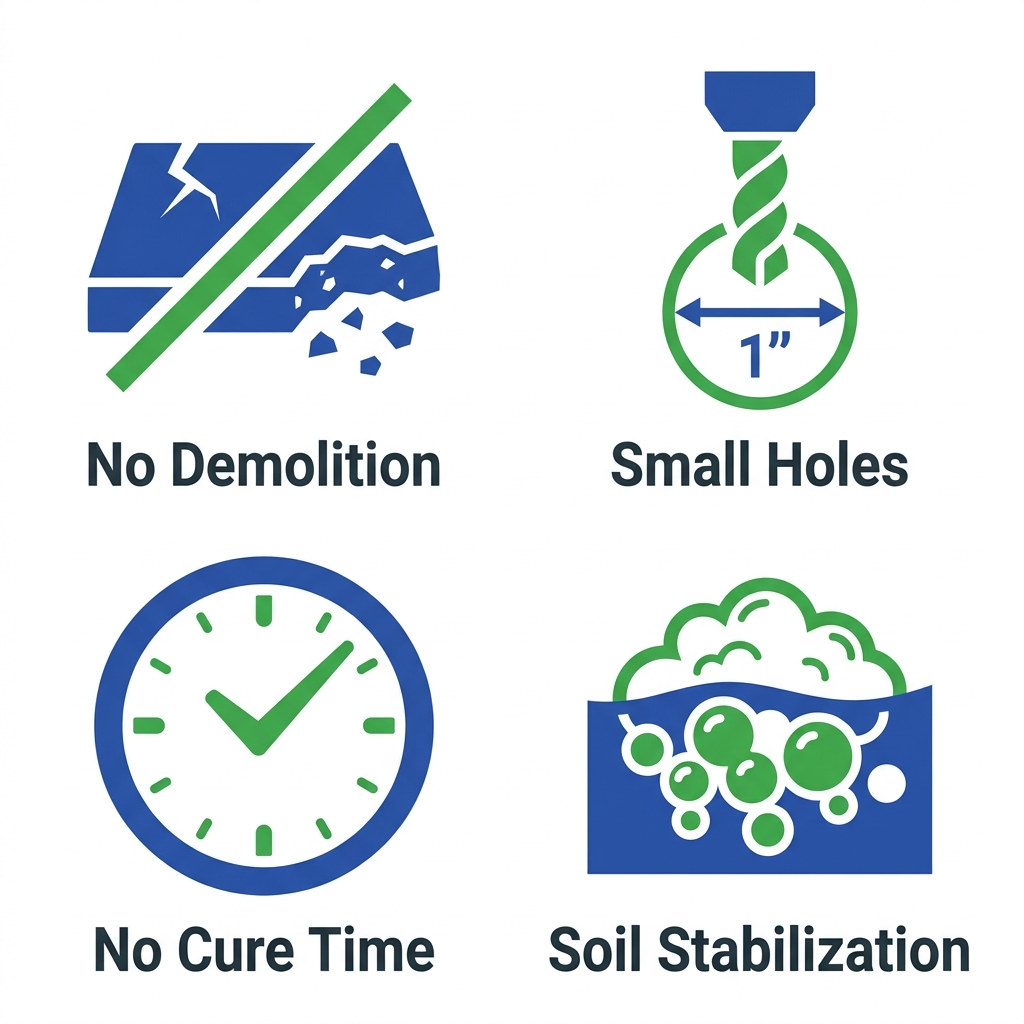
- Minimal demolition and disposal — only a few 1–2 inch access holes.
- Rapid curing allows immediate loading, reducing downtime and labor.
- Our polyurethane injection can also stabilize underlying soil, helping prevent future settling.
In Denver, the cost of polyurethane foam concrete leveling is often lower than replacement, and polyurethane injection soil stabilization adds long-term value. When you evaluate polyurethane foam lifting vs concrete replacement, these efficiencies yield measurable savings.
Ready to start your construction project? Contact us for a custom quote. As a family-owned and operated since 1996, we offer honest estimates — final costs depend on an on-site inspection and are not binding until confirmed in writing.
Beyond the initial savings, the process itself is remarkably efficient — as we’ll cover next.
2. Immediate Load-Bearing Capacity
Cost is only part of the story in a polyurethane foam lifting vs concrete replacement comparison — how soon your slab can support weight matters just as much. Our polyurethane foam lifting reaches load-bearing capacity in about 15 minutes, so driveways in Littleton and patios across the Denver metro area can be used the same day.
The polyurethane injection soil stabilization densifies the soil beneath the slab, providing immediate support that helps the repair last. In contrast, replacement concrete needs at least seven days of curing before it can bear normal residential loads.
In the polyurethane foam lifting vs concrete replacement decision, that downtime difference is often what drives homeowners to choose foam. However, actual load capacity depends on site-specific soil conditions, so we can only confirm suitability after an on-site inspection. The cost of polyurethane foam concrete leveling varies, so we provide a custom quote after an on-site inspection. We always recommend consulting a licensed structural engineer. As a family-owned and operated company since 1996, we offer a free inspection to help you decide.
3. Long-Lasting Performance
Beyond leveling the slab, the true value of the repair is how long it lasts. The polyurethane foam lifting longevity you can expect hinges on soil stability and drainage conditions, but the foam itself is designed to last.
Closed-cell polyurethane foam resists water absorption, eliminating freeze-thaw damage. The chemically inert material does not dissolve in wet soil, supporting decades of service. Actual longevity depends on soil type, moisture conditions, and the load the slab carries. Our inspection evaluates these variables to set accurate expectations.
When comparing polyurethane foam lifting vs concrete replacement, the critical advantage is root-cause treatment. Polyurethane injection soil stabilization firms up the weak soils beneath the slab, whereas new concrete alone may not prevent future settlement. For definitive diagnosis, always consult a licensed structural engineer or qualified professional.
The cost of polyurethane foam concrete leveling varies by site and is best determined through an on-site evaluation. Schedule an inspection for your property in Denver, Littleton, or across the Denver metro area to receive a custom quote and a lasting repair.
4. Eco-Friendly Slab Lifting
Beyond the structural benefits, polyurethane foam lifting vs concrete replacement is an eco-conscious choice that preserves your existing concrete slab rather than tearing it out.
Our polyurethane injection soil stabilization process involves drilling small holes, injecting expanding foam to lift and level the slab, and patching the holes—leaving the original concrete in place. This method dramatically reduces construction waste: no ripped-out concrete heading to landfills, fewer raw materials consumed, and less demand for new concrete production. The smaller equipment and shorter project time further lower the carbon footprint and minimize site disruption for properties in Littleton, Denver, or across Colorado.
When considering the cost of polyurethane foam concrete leveling, we provide custom quotes after an on-site inspection, as pricing depends on site conditions. Contact RMS today for your custom quote, and always consult a licensed structural engineer for definitive diagnosis and recommendations. Now let’s look at how our polyurethane foam lifting process works in practice.
5. Heavy Slab Support
When weighing polyurethane foam vs concrete replacement for a settling slab, heavy or heavily loaded concrete often needs a more robust solution: helical pier support. Heavy slab support involves installing galvanized helical steel piers beneath large or heavy concrete slabs — garage floors, driveways, patios, and commercial/industrial slabs — to arrest settlement and stabilize the structure. We turn piers through unstable soil until they reach competent load-bearing strata, then secure the slab weight with a bracket assembly. Key benefits include:
- Immediate load capacity with no concrete cure time
- Minimal site disturbance through small access pits rather than full slab replacement
- Predictable capacity verified during installation
- Faster installation rates in poor soils — often up to 66% faster than alternative methods
While polyurethane foam lifting suits lighter, less damaged slabs, heavy slab support is the stronger choice when deep or weak soils preclude surface-level polyurethane injection soil stabilization. We recommend consulting a licensed structural engineer for definitive diagnosis and design recommendations. Ready to start your construction project? As The Experts in Steel Piers, family-owned and operated since 1996, we provide on-site inspections in Littleton and deliver written custom estimates for every project.
6. Better Than Mudjacking
While mudjacking has been a common fix for decades, it is not always the best choice. Mudjacking, or slab jacking, involves pumping a heavy cement-and-sand slurry beneath a concrete slab to raise it. However, this weight can stress underlying soils, and the slurry may wash out or settle over time, leaving larger access holes and requiring cure time before the slab is usable.
Polyurethane foam lifting avoids these drawbacks. The high-density foam expands to fill voids, stabilizes the soil, and weighs far less than slurry. It needs only small holes and can bear weight almost immediately—no cure time required. Our certified installers often complete foam lifts up to 66% faster than mudjacking in poor soils, with minimal site impact.
In Colorado’s expansive soils, polyurethane injection soil stabilization helps prevent settlement. When evaluating polyurethane foam lifting vs concrete replacement, it’s an efficient alternative that addresses the underlying problem.
The cost of polyurethane foam concrete leveling varies; we provide custom quotes after an on-site inspection. Ready to start your construction project? Contact our family-owned and operated since 1996 team in Littleton, Denver, and surrounding Colorado communities.
7. Strengthened Soil and Prevention
When comparing polyurethane foam lifting vs concrete replacement, the soil-strengthening benefits of foam injection often provide a compelling preventive advantage. Beyond simply leveling the slab, polyurethane injection soil stabilization fills subsurface voids and densifies weak soil layers through a controlled chemical expansion that compacts the ground from within.
As our technical guide explains, the foam cures rapidly and forms a closed-cell, water-resistant matrix that increases load-bearing capacity and helps prevent water from channeling beneath the slab. This soil densification reduces the risk of future settlement and lessens the need for ongoing maintenance, although actual outcomes depend on site-specific conditions and a thorough professional inspection.
However, when deep structural movement or severe erosion have compromised the foundation, soil stabilization alone may not be sufficient; helical piers or tiebacks are often required. We recommend consulting a licensed structural engineer for a definitive diagnosis. A site inspection by our family-owned team—serving the Littleton area since 1996—will determine the best approach for your project.
8. Minimal Site Disruption
Beyond their structural advantages, our installation methods also create minimal site disruption. When evaluating polyurethane foam vs concrete replacement, the most noticeable difference is how much of your property stays untouched. Helical pier installations use small access points and specialized rotary equipment, avoiding heavy excavation. Polyurethane injection soil stabilization works through 1–2 inch holes, preserving lawns, patios, and sidewalks in Littleton and the Denver metro area.
Helical piers and polyurethane foam provide immediate load-bearing capacity, eliminating cure time and shortening the overall project. This means minimal disruption even in tight-access locations such as crawlspaces, behind finished basements, or under porches where excavation would be impractical. As a family-owned company serving Colorado since 1996, our trained, certified installers protect every worksite—residential and commercial.
Because ground conditions vary, we provide a custom assessment after an on-site inspection. We also recommend consulting a licensed structural engineer for a definitive diagnosis and design recommendations. To explore our minimal-impact approach, contact us to schedule a free evaluation.
Your Path to a Stable Foundation with Polyurethane Foam Lifting
When faced with sunken concrete, we often see homeowners weighing polyurethane foam lifting vs concrete replacement. Foam lifting offers a faster, less disruptive alternative that stabilizes soil beneath the slab.
Our polyurethane injection soil stabilization process uses small-diameter holes to inject expanding foam that densifies weak soils and lifts concrete. Because the foam cures quickly, your concrete can bear weight immediately with minimal downtime. To evaluate whether this solution fits your situation, we provide a detailed on-site inspection and a custom quote for the cost of polyurethane foam concrete leveling – no published pricing, just a tailored plan for your property.
We serve homeowners in Littleton and across the Denver area. Ready to start your construction project? As always, consult a licensed structural engineer for definitive diagnosis and recommendations.